

How VR Training Improves Safety Compliance in Oil & Gas Operations
Safety compliance in oil and gas operations can be improved by the Virtual Reality training, which substitutes conventional and passive modes of learning.

Safety compliance in oil and gas operations can be improved by the Virtual Reality training, which substitutes conventional and passive modes of learning. Further, immersive and high-fidelity simulations enable the workers to learn the hazardous and high-stakes procedures in a risk-free, controlled setting. VR safety training simulation facilitates muscle memory, enhances safety awareness, and results in a proactive safety culture associated with repetitive practice of standard operating procedures (SOPs) and emergency responses.
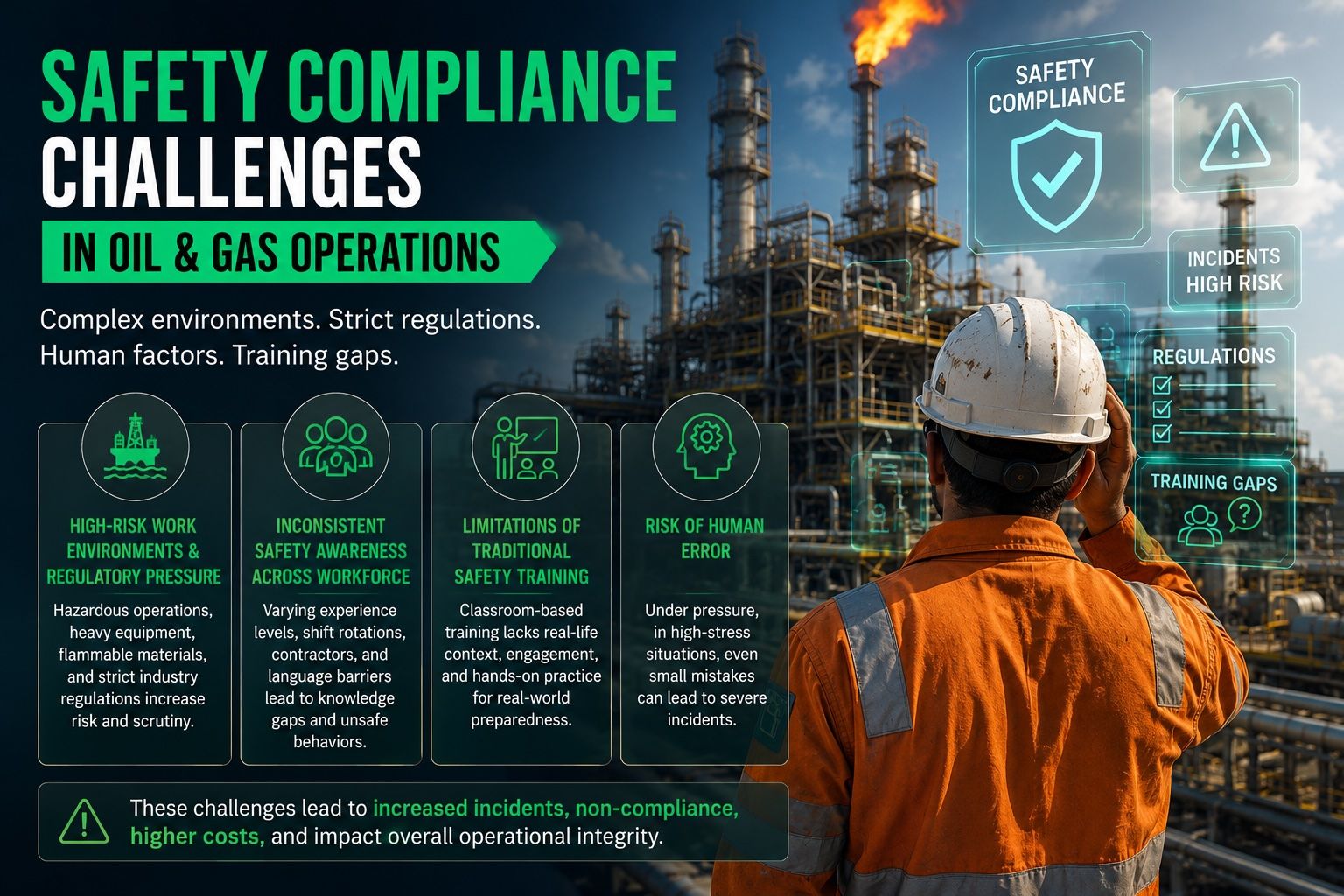
Safety Compliance Challenges in Oil & Gas Operations
Hazardous environments, complicated regulations, the risk of human error, and the lack of training opportunities in the real world are all challenges that make oil and gas operations comply with safety regulations.
High-Risk Work Environments and Regulatory Pressure
Oil and gas operations involve hazardous business activities, including heavy machinery, harmful gases, and high-pressure systems. The severity of the operations risks is indicated through industry reports that reveal that the workers in this industry experience a high fatality rate compared to other industries.
Inconsistent Safety Awareness Across Workforce
The safety awareness of the employees, contractors, and rotating shift workers has not been consistent in relation to oil and gas operations. Knowledge gaps arise due to differences in experience, the quality of training, and language barriers.
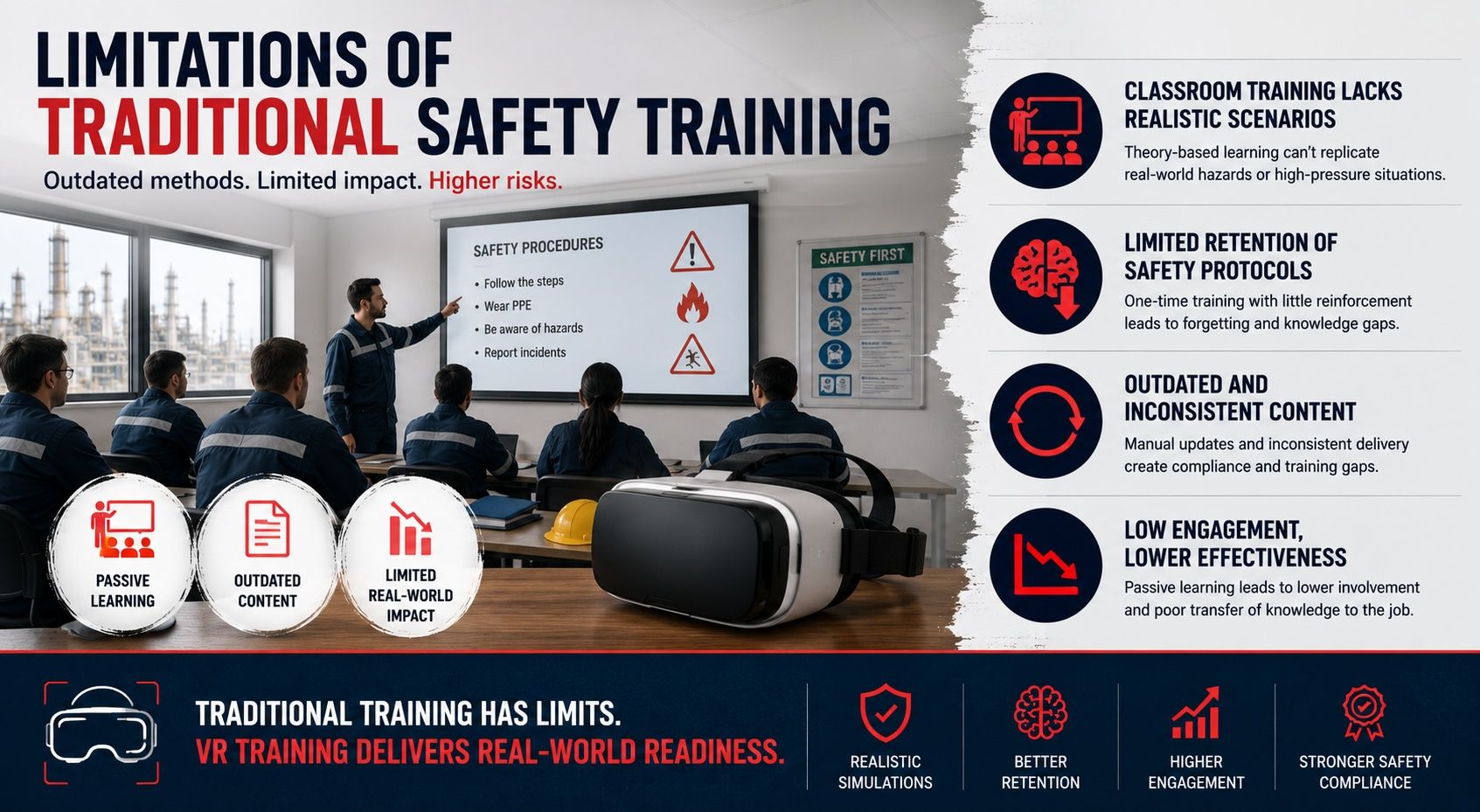
Limitations of Traditional Safety Training
Conventional training on safety is usually based on theory-based classes, restricted simulations, and regular updates with less real-life knowledge and response to hazards.
Classroom-Based Training Lacks Realistic Scenarios
Conventional classroom-based safety training is usually based on lectures, manuals, and fixed presentations that cannot simulate the real hazards of oil and gas. It has been witnessed that VR students are more than 3.75 times more connected than classroom students. This illustrates the constraining nature of conventional approaches to practical readiness.
Limited Retention of Safety Protocols
Traditional safety training in oil and gas operations often leads to low retention of the essential safety procedures. The workers usually receive one-time training with little reinforcement afterward, and significant protocols become forgotten over time. This single-way methodology leaves knowledge gaps.
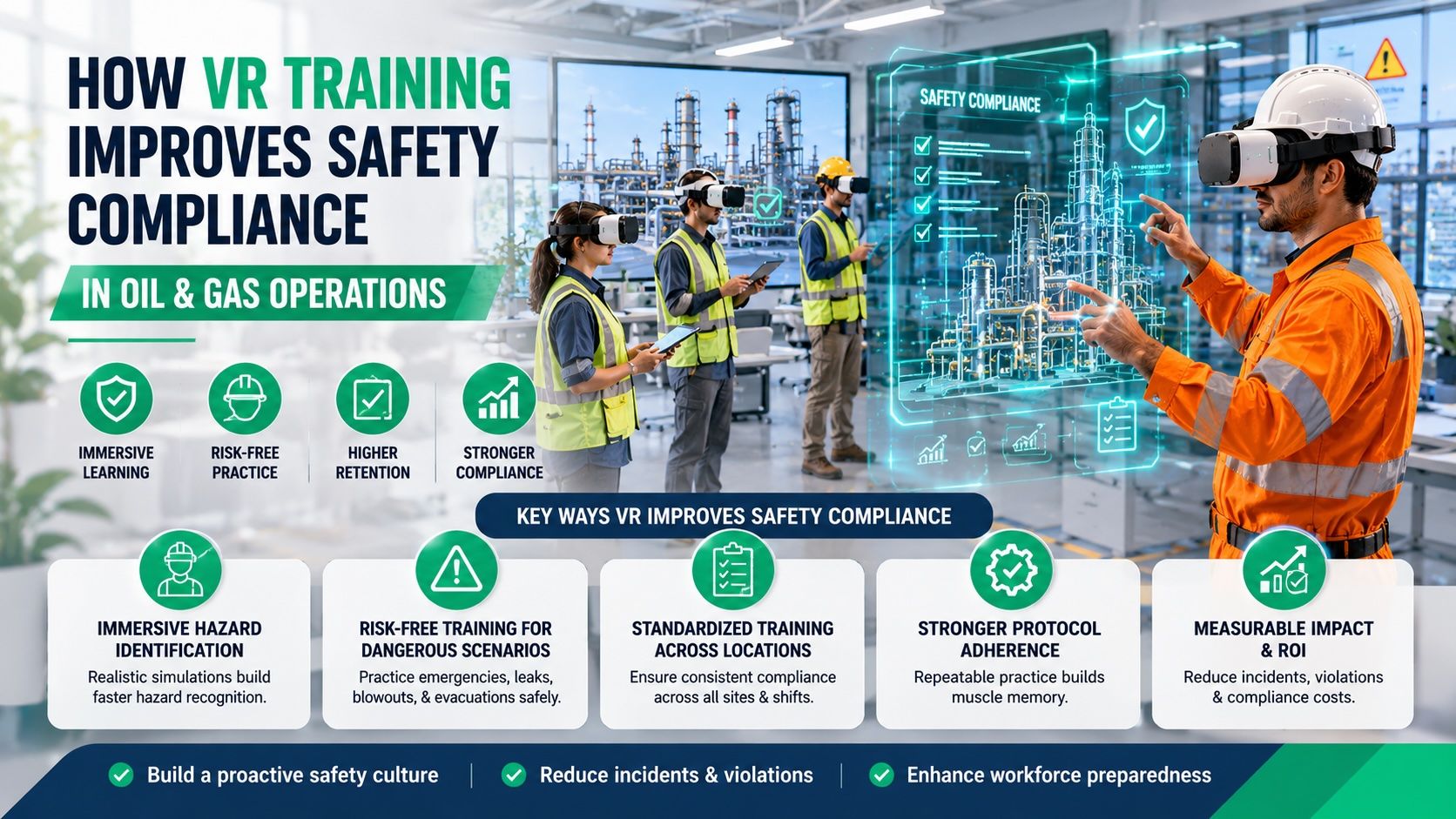
How VR Training Improves Safety Compliance
VR training is safer to use because it mimics the actual dangerous scenarios, promotes better awareness of hazards, makes procedures more solid, and offers learners the opportunity to learn in a risk-free environment.
Immersive Hazard Identification Simulations
One of the most important benefits of VR training solutions in oil and gas operations is the immersive experience of hazard identification simulations. In these simulations, workers are exposed to the real-world virtual scenarios. Through repetitive practice of responses in a safe environment, employees gain more situational awareness and adhere more effectively to safety compliance procedures.
Risk-Free Training for Dangerous Scenarios
VR training enables the oil and gas workers to train in dangerous situations, such as fire, blowouts, broken equipment, or toxic gas leakage, without facing the real hazards. Consequently, employees gain confidence, enhance the accuracy of their responses, and enhance safety compliance prior to going to actual working conditions.
Standardized Safety Training Across Locations
VR training assists oil and gas corporations in providing uniform safety training across various facilities, offshore rigs, and international locations. Businesses focus on the quality of training in scattered locations, an aspect where VR will play a significant part in ensuring uniformity in safety regulation at international levels.
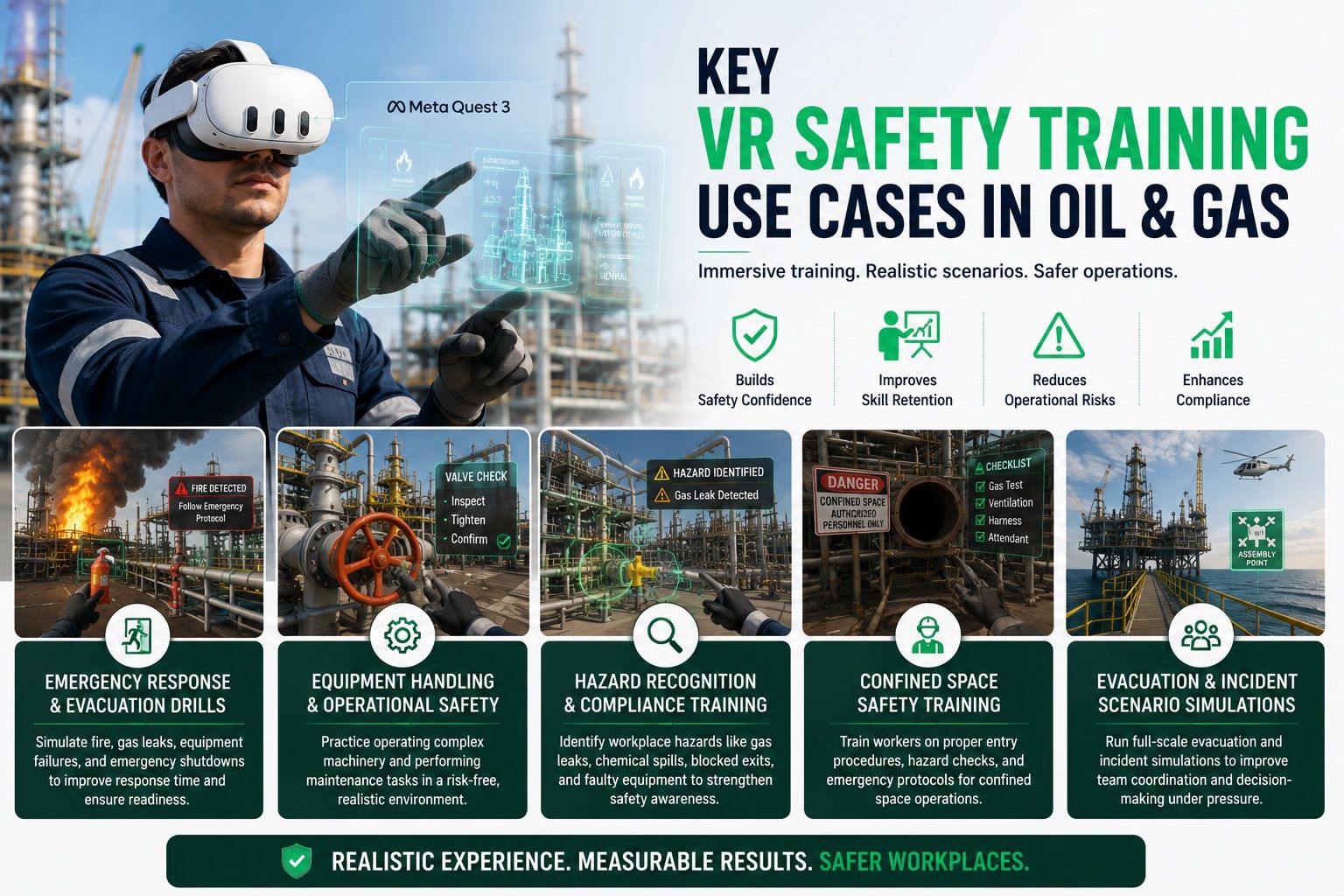
Key VR Safety Training Use Cases in Oil & Gas
Among the applications of VR safety training are emergency response training, equipment operation training, hazard identification, confined space safety, and evacuation simulation.
Emergency Response and Evacuation Drills
VR helps oil and gas companies to simulate emergency response and evacuation exercises in the most realistic virtual settings. The employees are trained in fire management, gas, equipment malfunctions, and emergency shutdowns without interfering with the processes. Research has found that employees who are trained to use VR more accurately and quickly than standard e-learning respondents in evacuation duties enhance preparedness and adherence to safety protocols.
Equipment Handling and Operational Safety
Virtual reality training for manufacturing workers involves working with complicated machines and performing maintenance and safety protocols within a virtual environment in real-life conditions. Such simulations enhance technical accuracy and minimise the errors in operation when handling equipment. VR training can shorten the time of acquiring the skills by approximately 40 percent and enhance the performance of tasks, which enhances safety compliance in high-risk environments.
Hazard Recognition and Compliance Training
VR training will allow employees to detect workplace risks, which include gas leaks, chemical spills, blocked exits, and unstable equipment. Workers learn to identify risks and use safety measures by operating on simulated rigs, refineries, or pipelines. Learners are able to increase 75 percent of knowledge retention compared to conventional methods. Engaging material enhances concentration and reduces attention.
Business Impact of VR-Based Safety Training
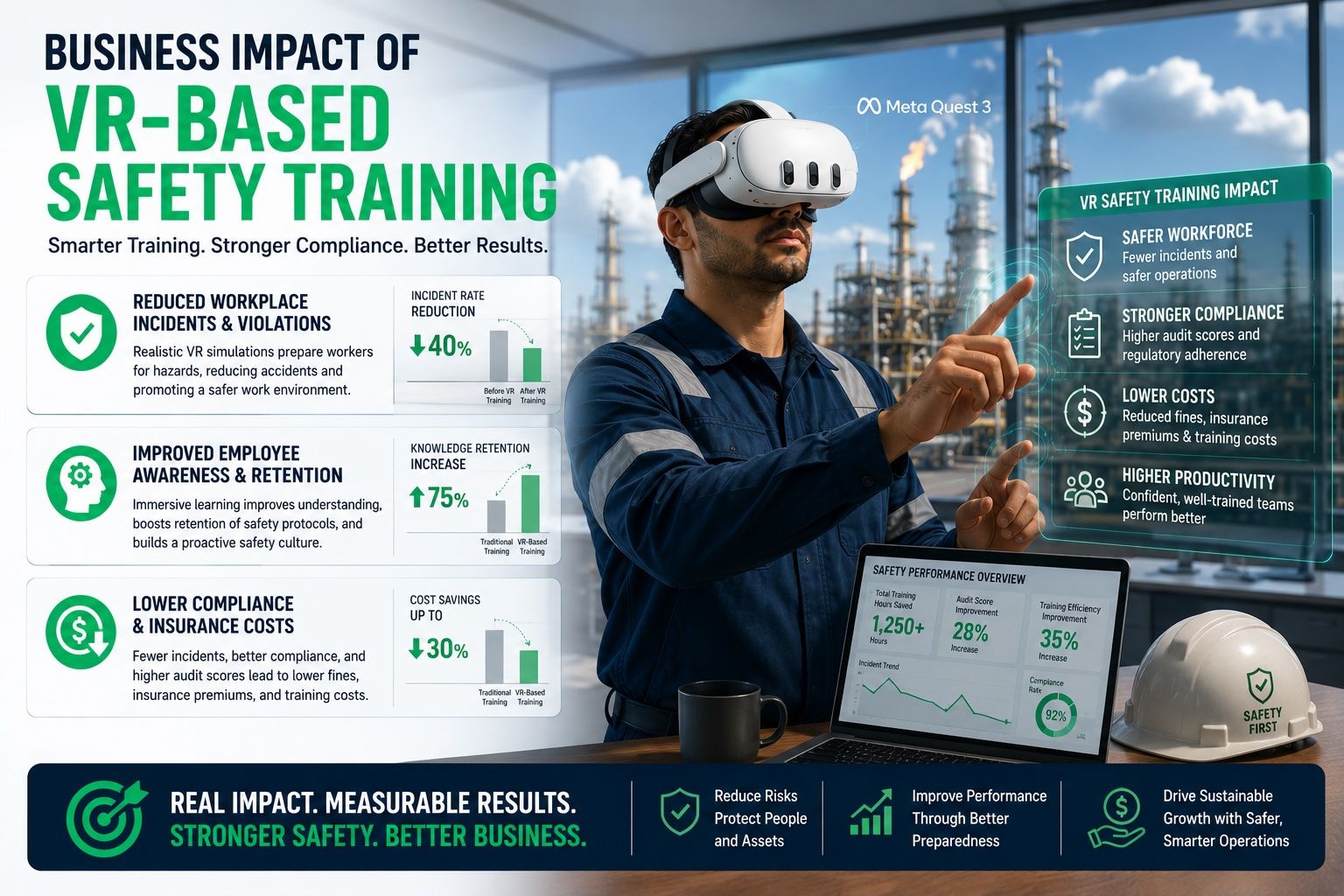
VR-related safety training raises operational efficiency, lowers the number of incidents at the workplace, increases compliance with regulations, reduces the costs of training, and increases workforce preparedness in the oil and gas sector.
Reduced Workplace Incidents and Violations
VR safety training reduces workplace accidents to a minimum by providing workers with the opportunity to train on the most important safety procedures within a virtual setting and then enter the areas of risk. Studies indicate that companies that have adopted VR safety interventions have reduced the number of incidents at the workplace in the initial year.
Improved Employee Awareness and Retention
Safety training using VR enhances the level of employee awareness because the workers get into the role in the real field of operation with proper utilisation of equipment, experiencing the hazards, and the process. This form of learning makes the employees recall safety measures in a better way and use them confidently in actual operations.
Lower Compliance and Insurance Costs
VR training on safety assists organizations to remain more compliant with regulations and minimize the risks in the workplace. A decrease in safety breaches and incidents will result in a decrease in insurance premiums and compensation claims. The estimated average reduction in fines through VR compliance training is $2 million less per violation, and Construction VR allows cutting retraining overtime expenses by half.
Implementing VR Safety Training in Oil & Gas Companies
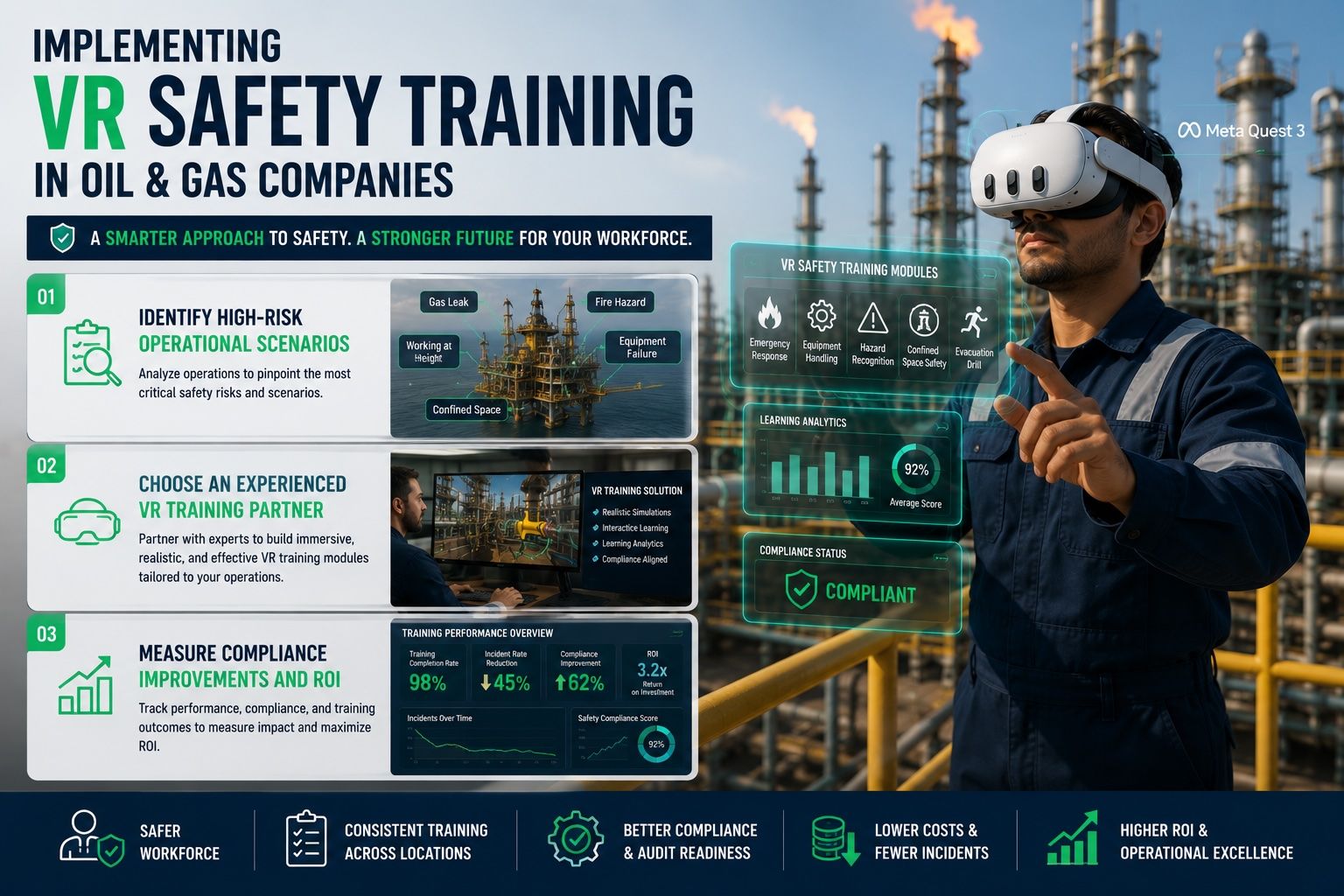
VR safety training in oil and gas companies may be presented through maintaining immersive learning modules, organized learning programs, and ongoing compliance-based workforce training programs.
Identify High-Risk Operational Scenarios
Effective VR safety training starts with the definition of the situations that represent the most significant safety risks at oil and gas facilities. These can be drilling activities, entry of confined spaces, maintenance of equipment, and recovery activities of an emergency shutdown.
Choose an Experienced VR Training Development Partner
To develop effective VR safety training programs in oil and gas operations, it is necessary to choose the Top AR/VR development company. Skilled developers can create lifelike simulations, combine learning analytics within training modules that are consistent with operational safety criteria and compliant goals.
Measure Compliance Improvements and ROI
These companies that train their workers using VR safety training must monitor observable results. The indicators are a decrease in the number of safety violations, an increase in audit scores, accelerated training, and increased compliance with operational procedures.
Conclusion
VR training is changing the concept of safety compliance in oil and gas operations through its immersive and practical learning experience. It makes the employees familiar with hazards, how to react in case of an emergency, and how to observe safety measures better. Now, oil and gas companies striving to implement the latest gamified training development can collaborate with Aura Interact to create interesting, effective safety programs.