

How VR Simulations Are Transforming Oil and Gas Training and Onboarding
VR simulations are transforming oil and gas onboarding by cutting down incident rates, increasing retention, and increasing preparedness in high-risk environments.

VR simulations are transforming oil and gas onboarding by cutting down incident rates, increasing retention, and increasing preparedness in high-risk environments. With immersive training, companies' recordability and competency are achieved faster than traditional training; retention and emergency response also improve. On the same note, AuraInteract has been controlling workforce preparedness through Virtual reality training safety simulations.
Training and Onboarding Challenges in the Oil and Gas Industry
Some notable training and onboarding challenges in the oil and gas industry are
High-Risk Work Environments and Safety Hazards
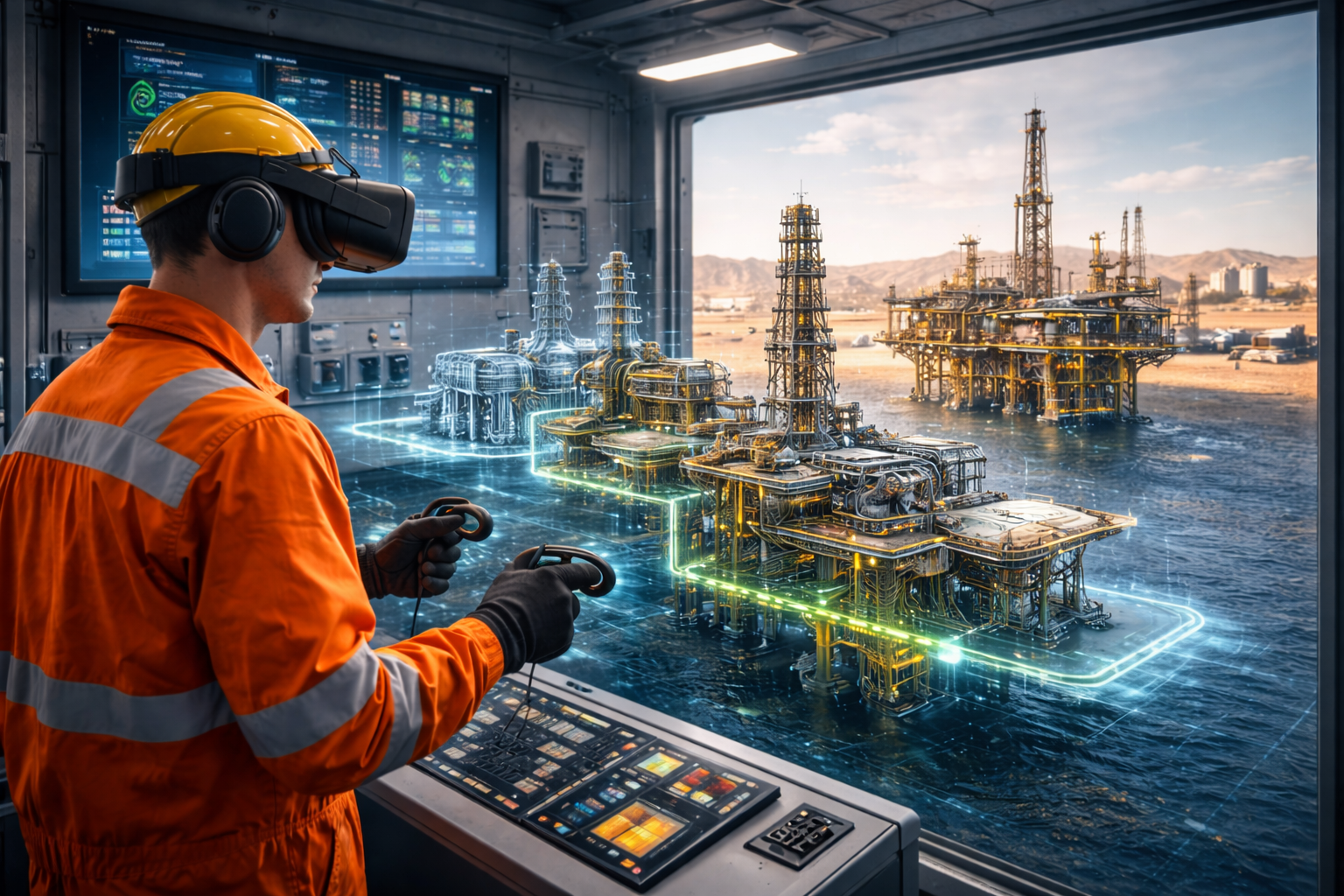
The oil and gas companies deal with working with dangerous chemicals, machinery, and high workloads, and require strict safety measures. Conventional training does not always provide such conditions without harming trainees, which constitutes the limitation of the realistic preparation to actual emergencies and sophisticated responses to hazards.
Complex Equipment and Operational Procedures
On-site employees have to learn complex systems and equipment with a high level of regulatory compliance. As half of the workforce nears their retirement age, the digital skills gap is increasing, and traditional classroom training is not able to bridge the gap effectively.
Remote Locations and Distributed Workforce
Oil and gas facilities are often located in remote locations, including offshore platforms, deserts, and rugged environments, which makes it difficult to access a training location regularly. Travel coordination and provision of equal learning opportunities among remote teams make the onboarding logistics extremely difficult.
High Cost of Traditional Training and Downtime
Traditional training involves commuting to the training venue, instructor fees, and operational time. These expenses and productivity issues are significant considering that the amount of money spent on global industry training is expected to rise more than 40 billion per year.
Read More: How VR Safety Training Reduces Workplace Accidents in High-Risk Industries
Why Traditional Training Models Fall Short
Indeed, traditional methods have been efficient, but ongoing industrial demands have led to more productivity. These conventional offshore methods are no longer competent.
Classroom and Video-Based Training Lacks Realism
Traditional training provides theoretical understanding but does not simulate the dynamic and risky nature of the oil and gas business, which does not translate to real field training. Almost 68 percent of the respondent companies in the oil and gas industry indicate that safety and practical competence are not easily attained using conventional training only.
Limited Hands-On Practice Before Field Deployment
With standard training, practical experience is limited because of the safety and logistical issues involved, especially with complicated machines and emergency operations. Consequently, inadequate training time can be devoted to actual task performance, which also leads to a shortage of skills as the staff members move to live activities. This leads to a huge digital and safety skills gap, with approximately 48 percent of oil and gas workers believing that they are not ready to work in the industry digitally.
Inconsistent Skill Levels Across Teams and Locations
Training uniformity continues to be a problem as the distribution of workforces and use of localised training result in inadequacy at competency levels in different sites. Nearly one-third of the employees in the energy sector mention that the absence of training prevents efficient use of new tools, indicating differences in training delivery and workforce preparedness.
Read More: Revolutionizing Training and Simulation with VR Technology
How VR Simulations Solve Oil and Gas Training Challenges
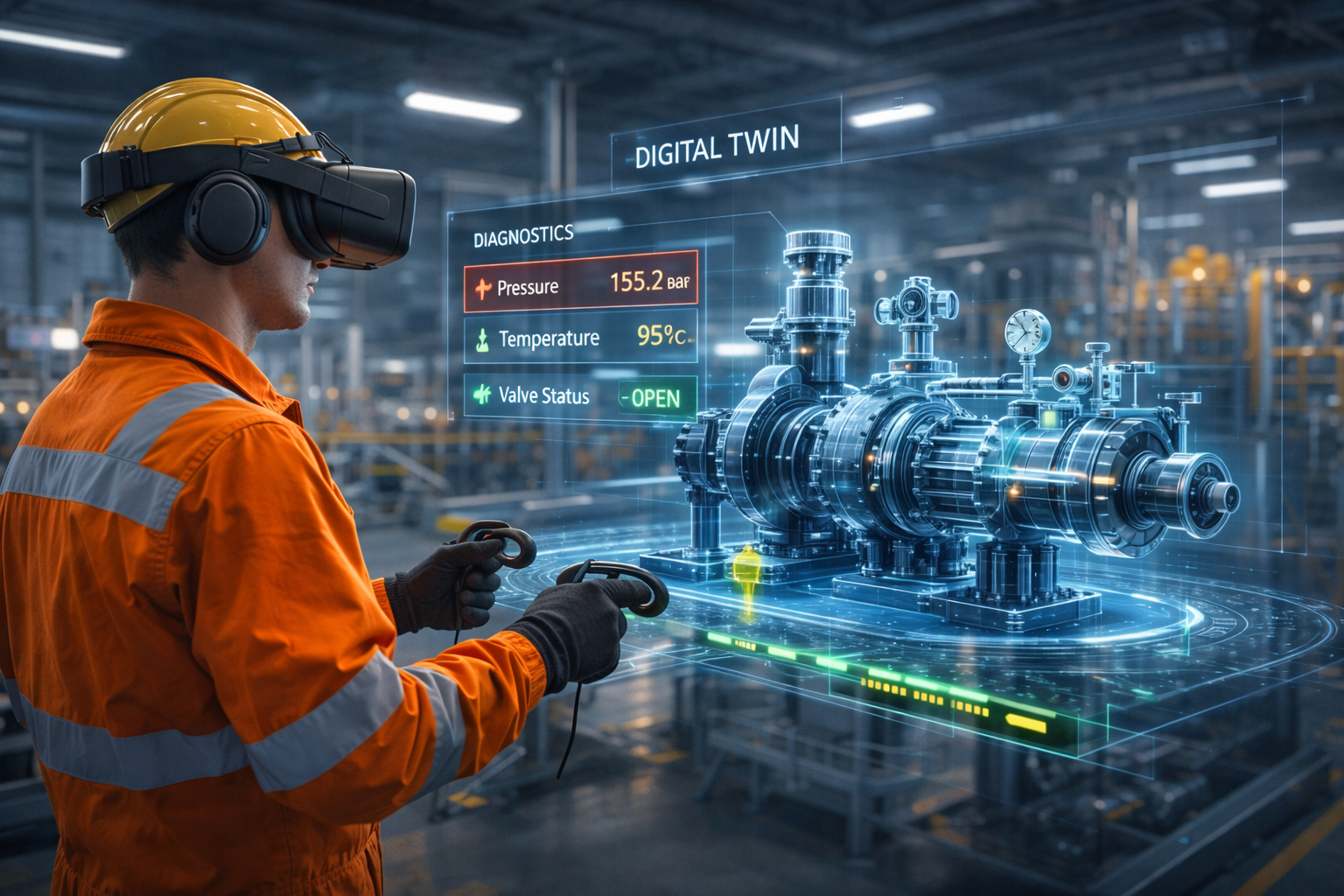
Now, when VR simulation comes into play, these training challenges are properly addressed.
Immersive Safety Training in Risk-Free Virtual Environments
VR will dramatically increase hazards preparedness as trainees will be able to feel high-risk situations without any risks (e.g., emergencies, shutdowns, or oil rig accidents). Research demonstrates that VR training can cause workplace incidents to decrease and enhance emergency response time, as is the case in major operators who employ immersive simulations.
Realistic Simulation of Equipment, Rigs, and Processes
VR environments of high fidelity procure rigs, refineries, and exact simulation of complicated equipment, and behavioural analytics. These simulations also speed up the process of onboarding as they reduce the training time and increase the retention by a large margin.
Standardised Training Experiences Across Global Operations
VR has built-in performance monitoring and standardized modules that ensure uniform competency across dispersed teams and locations. Global operators can achieve safety metrics and compliance standards consistently.
VR Use Cases in Oil and Gas Training and Onboarding
With real-time VR use cases, you can understand the grog adaptation of oil and gas training and onboarding processes.
Safety Drills and Hazard Identification Training
The immersive VR safety training enables the staff to train on how to spot hazards and emergency intervention, without the risk of being exposed to a potential hazard. Shell Enterprise introduced VR safety training, which was reported to have cut the training incidents by 30 percent and achieved quicker emergency response rates. Studies conducted in the industry reveal that VR can decrease job-related accidents by up to 43%, which is a good indication of its effectiveness in high-risk environments.
Equipment Operation and Maintenance Simulation
VR training relies on the high-quality 3D representation of real equipment and facilities to provide a realistic training experience. Current VR solutions are capable of tracking all actions and decisions, and they present information about performance, reaction time, and gaps in skills, contributing to the optimization of the training programs.
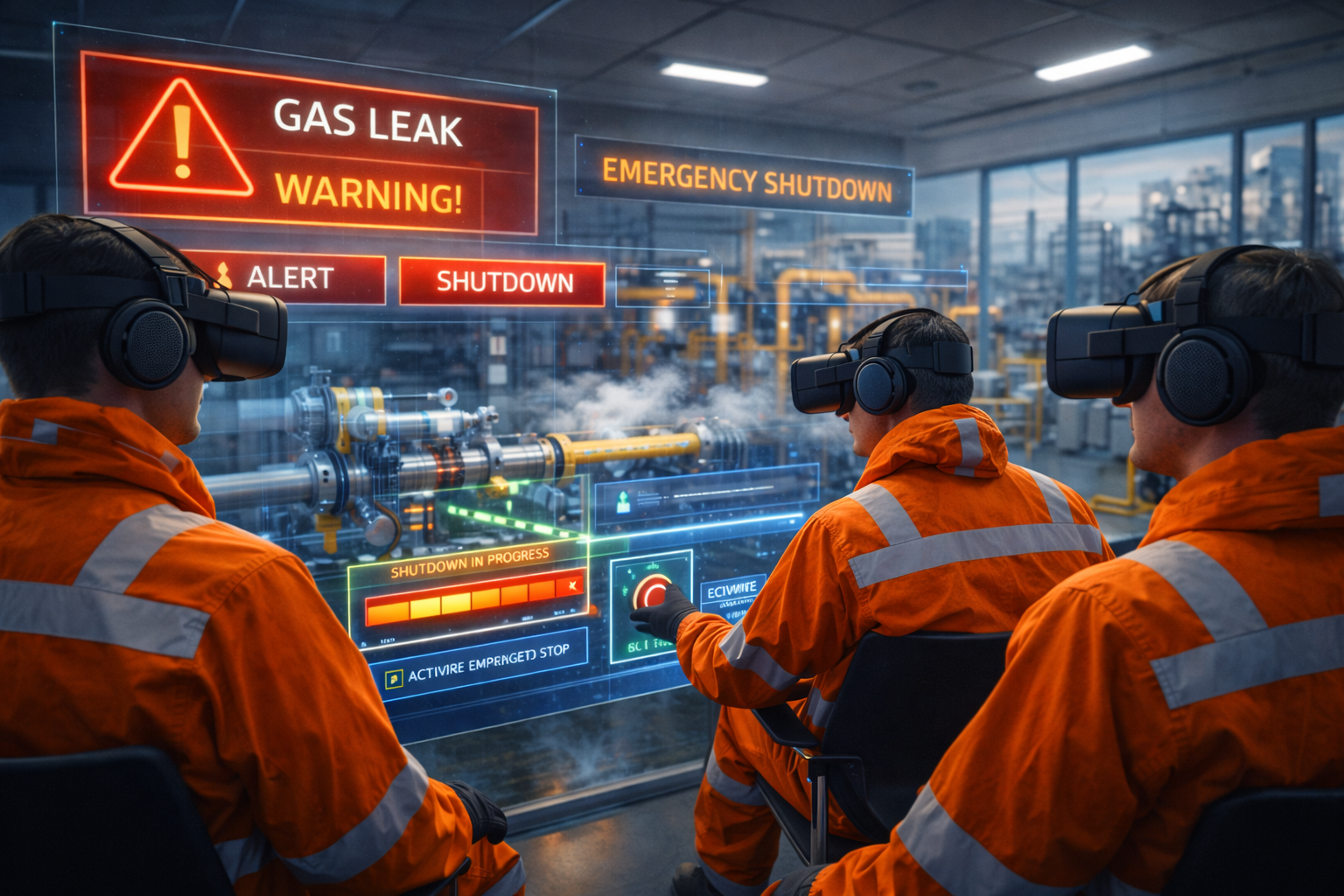
Emergency Response and Incident Management Scenarios
VR allows oil and gas operators to practice critical incident response - whether responding to fire and leak incidents or evacuations - and enhance decisions and coordination. As the usage increases, such situations would improve the readiness of teams worldwide. These applications reveal how VR training in the manufacturing-style immersive technology is offering quantifiable safety and performance outcomes in oil and gas training.
Faster Onboarding for New and Contract Workers
Virtual Reality also speeds up the onboarding process as it allows employees to practice in VR, which is interactive and repeatable, before the workers physically arrive at the workplace. VR has the potential to decrease time-to-competency, reducing onboarding duration compared to traditional approaches. VR enables the interaction of new employees and contractors in a simulated setting with realistic equipment and processes, and enhances the success rates of first-run tasks.
Business Impact of VR-Based Training Solutions
VR training protocols have been highly beneficial for oil nd gas companies all over the world.
Reduced Accidents and Safety Incidents
Implementation of VR training solutions contributes to the improvement of safety outcomes significantly. According varoius industry reports, VR makes the industry safer by enabling training on hazards in an immersive manner. Shell VR training is included in its attempt to increase operational safety and reduce risk exposure in high-risk settings. The shift helps reduce the incident rate because the employees get better prepared to cope with emergencies and routine work.
Faster Time-to-Competency for Workforce
Key players are adding VR to digital transformation initiatives with the aim of citing its importance in experiential learning and accelerated workforce preparation. In addition to videos and manuals, Forbes observes that immersive VR assists employees in resolving more complex situations in the real world before deployment and accelerates the learning of skills among staff members significantly.
Lower Training Costs and Operational Disruptions
Companies are increasing the use of VR and AI to provide scalable, immersive training, which can reduce the physical resources, travel, and classroom durations, decreasing the overall cost per trainee and minimising the downtime.
Implementing VR Training Programs in Oil and Gas Enterprises
Besides understanding the VR training program’s real-time success ratios proper implementation plan enables strict digital development.
Identify High-Risk and High-Impact Training Areas
Companies can adopt immersive with proper identification of the most expensive areas of errors: safety compliance, emergency response, rig operations, and refinery processes. According to GlobalData and industry reports, oil and gas giants, such as Shell, BP, Chevron, and ExxonMobil, have already introduced VR to these essential functions to improve workforce preparedness and minimize field risk exposure. These programs facilitate the simulation of hazards and complicated processes in a safe setting prior to the workers going into an active setting.
Partner with an Experienced VR Development Company
The effectiveness of roll-outs depends on strategic collaboration with developers who know the working processes and standards of the industry. AuraInteract helps in implementing gamified training development, so you can partner with vendors to translate SOPs, control logic, and CAD information into real job challenge-based immersive modules.
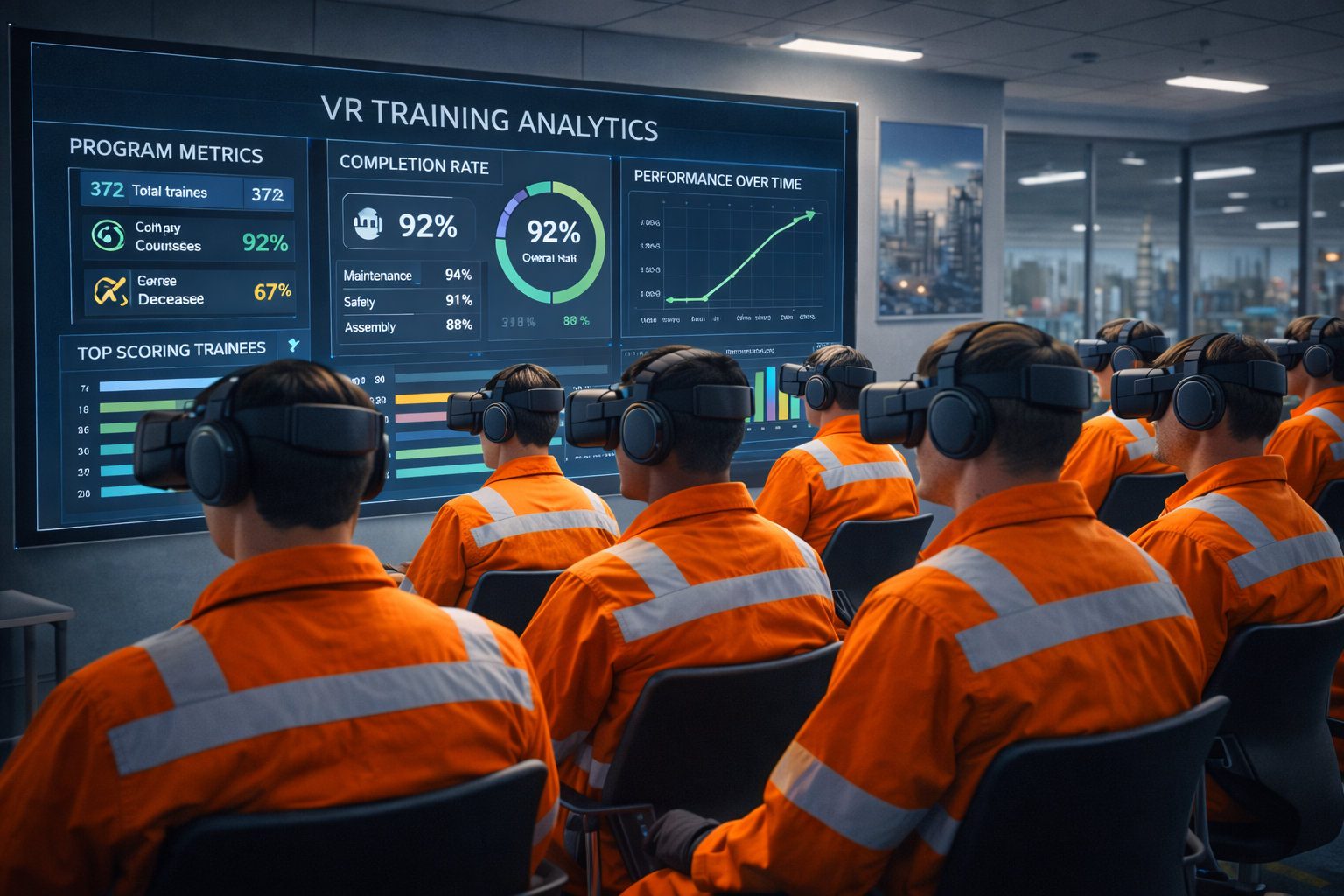
Measure Training Effectiveness, Compliance, and ROI
Enterprises would need to quantify results to warrant investment and prove value, which includes skill proficiency, reducing incidents and compliance rates, and operational performance. Immersive-based analytics enable L&D and HSE leaders to measure these improvements, assist in ongoing optimisation, and equate the training outcomes with business KPIs such as reduced downtime, quicker readiness, and safer operations.
Conclusion
VR-based approach to learning is transforming oil and gas training through enhancing safety performances, speeding time to workforce preparation, and minimizing operational hazards. Enterprises can have quantifiable ROI with data-driven and immersive simulations, and also train global teams with standardised skills. Choosing AuraInteract, the top AR VR development company, guarantees scalable, compliant, and future-ready training ecosystems. We also provide oil and gas enterprise-specific VR solutions of industrial grade.