

How to Reduce Human Errors in Oil & Gas Operations Through Immersive VR Modules
The introduction of immersive VR modules in oil and gas operations reduces the number of human errors in the operation. These modules train employees on the real-life situation of a hazard but do not expose them to hazardous conditions.

The introduction of immersive VR modules in oil and gas operations reduces the number of human errors in the operation. These modules train employees on the real-life situation of a hazard but do not expose them to hazardous conditions. Employees who have undergone VR safety training simulation are 4 times more serious than the traditional practices in the classroom and retain the knowledge much longer, making them more confident and competent. According to the industry reports, VR safety simulations not only decreased workplace accidents and errors but also controlled operating costs to an extent.
Furthermore, it helped in building an understanding of hazard recognition, which is the primary step towards eliminating human error in the complicated oil and gas industrial environments.
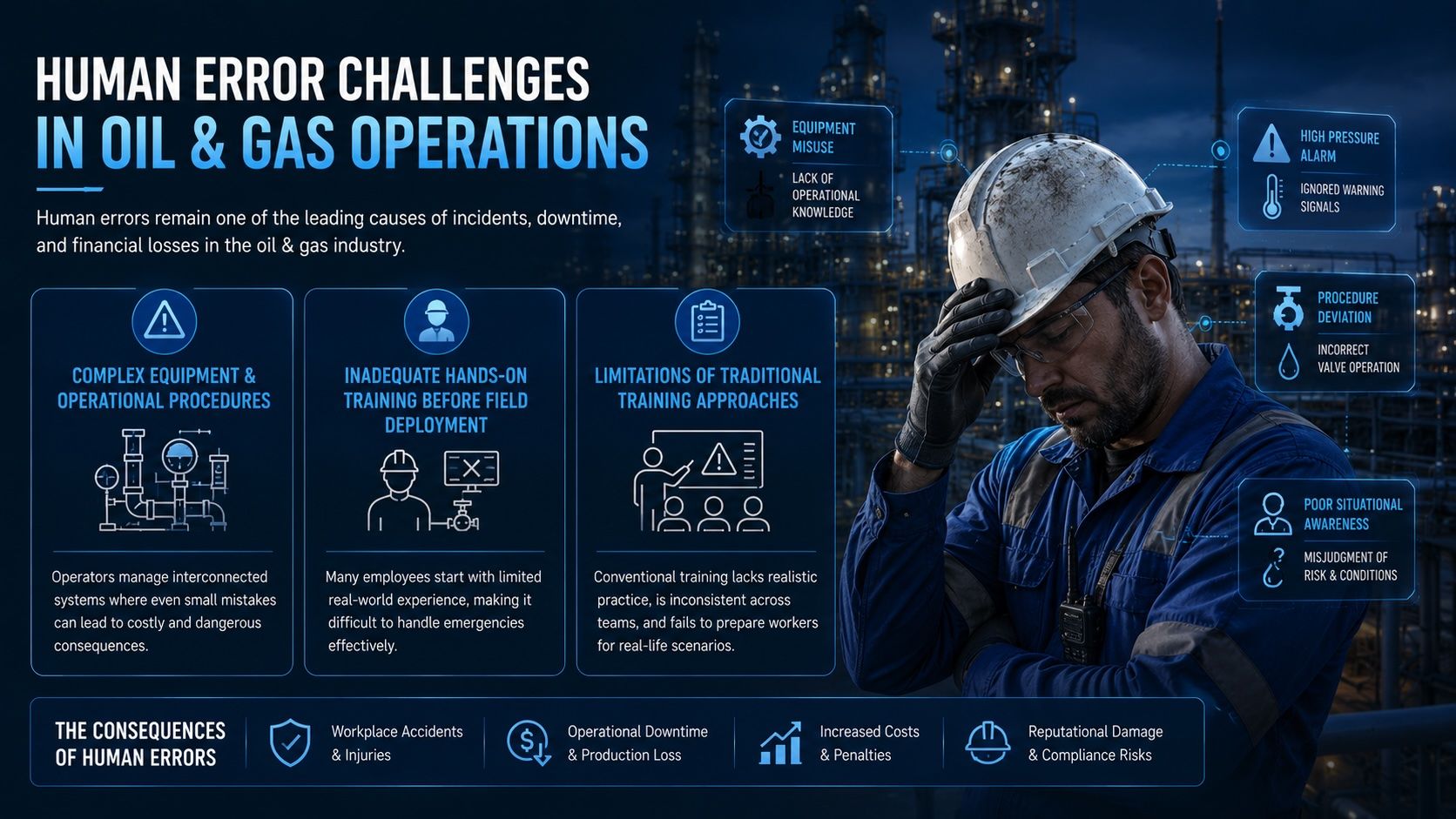
Human Error Challenges in Oil & Gas Operations
The challenges that are largely encountered in the oil and gas operations are further discussed.
Complex Equipment and Operational Procedures
Machinery and the operational processes used in the oil and gas industry are very complicated. The operators must deal with a series of systems that are not independent of each other and, hence, any small mistakes are expensive and risky.
Inadequate Hands-On Training Before Field Deployment
The industry is characterized by a high number of staff members who start working without much hands-on experience. Training in the traditional setting is not usually realistic or practical and as such, the workers are not in a position to deal with emergencies and hence they may make mistakes leading to loss of time between operations as well as accidents.
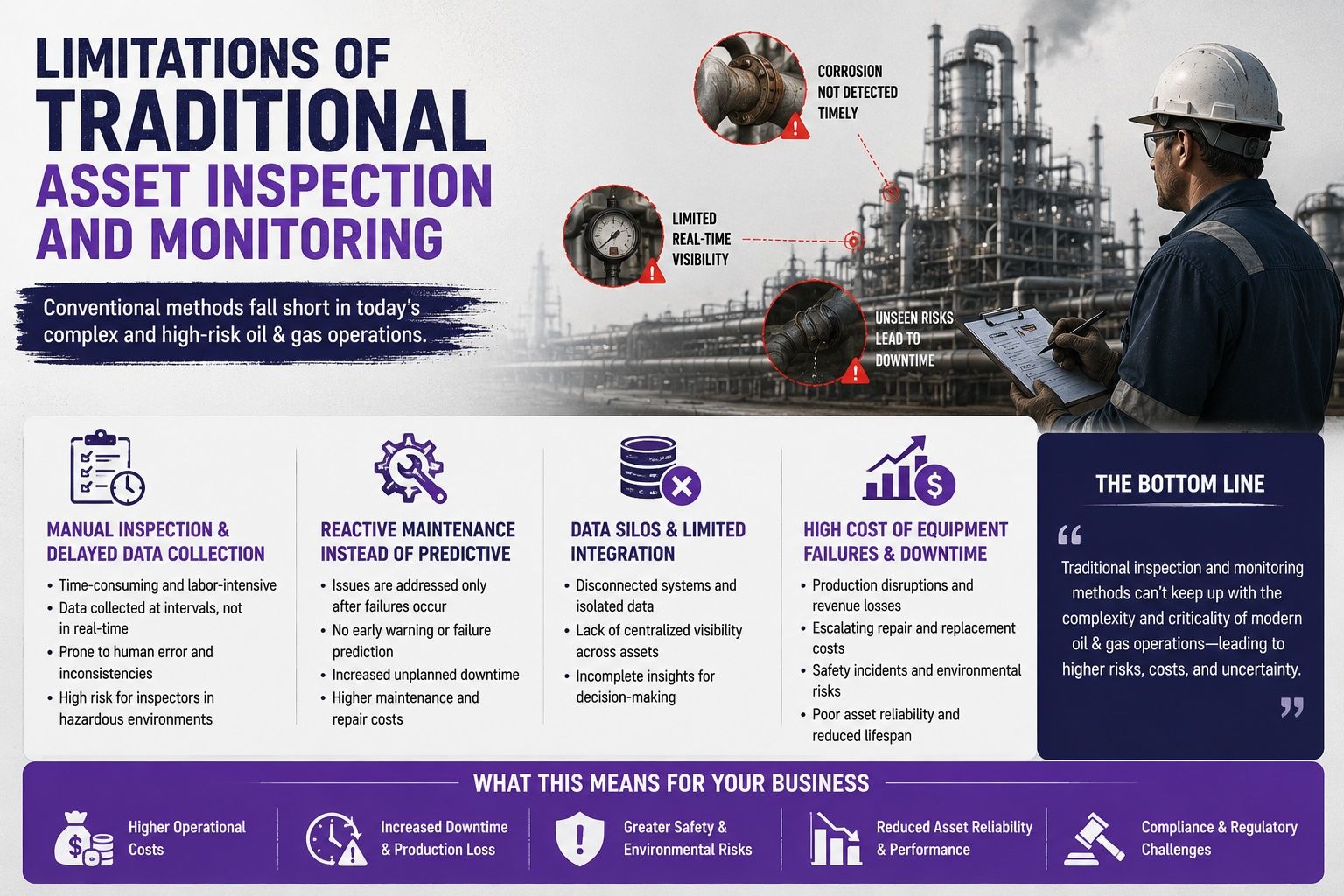
Limitations of Traditional Training Approaches
The use of VR within the oil and gas sector has been successful because there were unlimited loopholes in the conventional training processes.
Lack of Realistic Practice Environments
Normal training in classes based on conventional manuals does not simulate real life conditions of oil and gas operations. The trainees rarely face severe scenarios, complex relationships with equipment, and emergency cases, and, consequently, they are not ready to deal with any accident.
Inconsistent Skill Development Across Teams
Traditional approaches are usually varied in terms of instructors, location, and available resources, thus leading to inconsistent skill development. This inconsistency could lead to operational errors, inefficiency and safety issues since employees are not well trained.
Read More: The Cost Advantage of Offshore VR Development Services for Global Enterprises
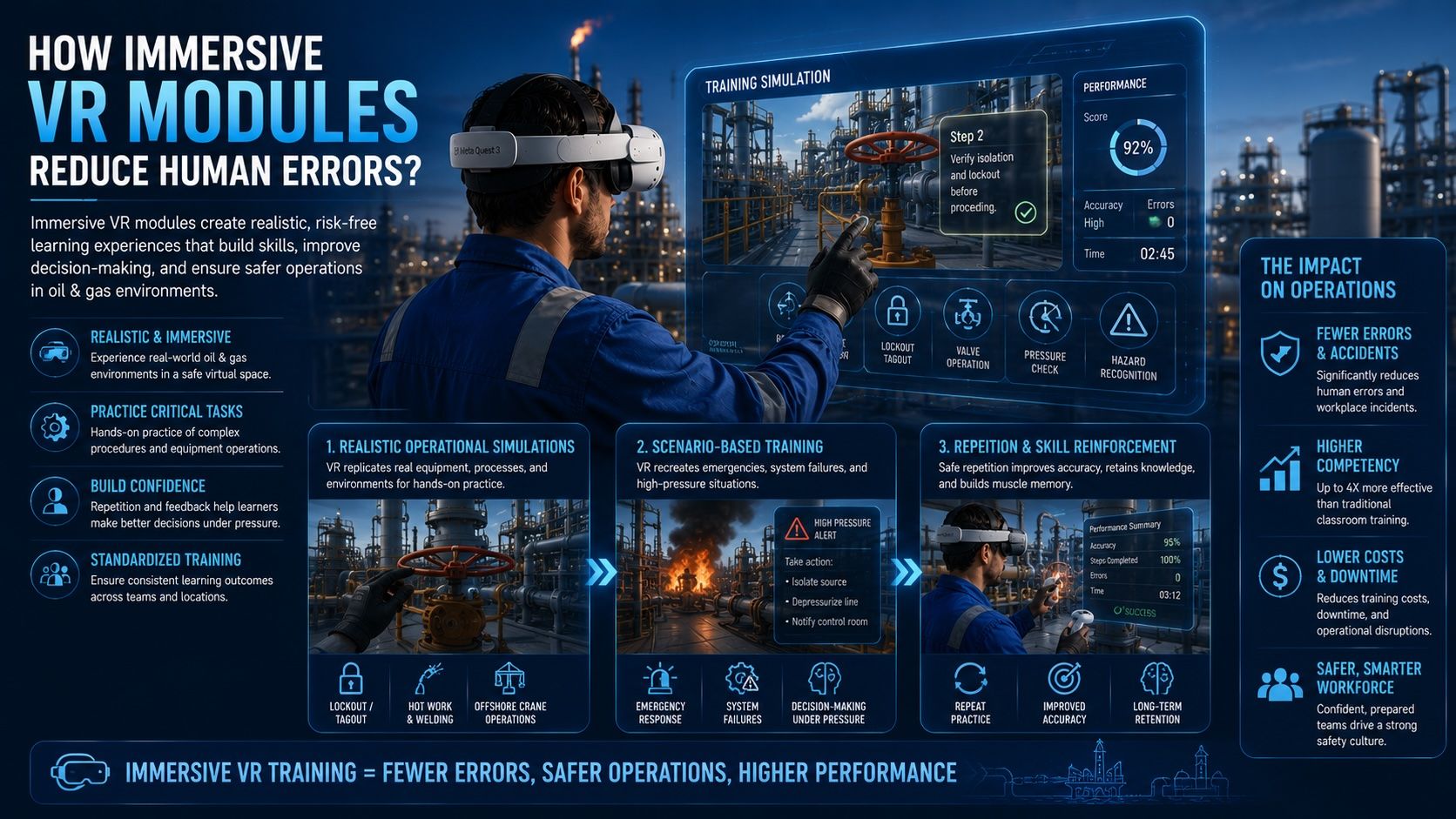
How Immersive VR Modules Reduce Human Errors?
The immersive VR modules have been minimizing manual errors in the long-run in various ways.
Realistic Operational Simulations for Practice
The immersive VR allows technicians to experience oil and gas equipment in a virtual environment. VR training for technicians helps them to simulate operational tasks like lockout safety protocol, hot work and welding, and offshore crane operations. VR uses 3D spatial simulation for practicing safety protocol, haptic precision for welding, and stereoscopic depth for offshore crane operations. These practice sessions upskill employees, reduce accidents, and lower high-end training costs.
Scenario-Based Training for Critical Situations
VR modules recreate the emergency, system failure, and high-pressure scenarios. In scenario-based training, for example, trainees not only learn about turn valves but also which valve needs repairing. Scenario training helps the technicians to prepare for the uncommon yet very dangerous events that might happen in order to improve decision-making in stressful situations. For example, virtual training educates trainees to sense virtual sensors showing a sudden increase in pit volume as a drop in drill pipe pressure before further damage.
Repetition and Skill Reinforcement in Safe Environments
VR provides an opportunity to train complex tasks in risky environments. Repetition aids in the consolidation of the appropriate processes and sustenance of equivalent skills development within groups, and decreases the time required in training, which boosts efficiency in operations. The VR learners have a 275 percent improvement in the application of the new skills in comparison to e-learning or in-person sessions.
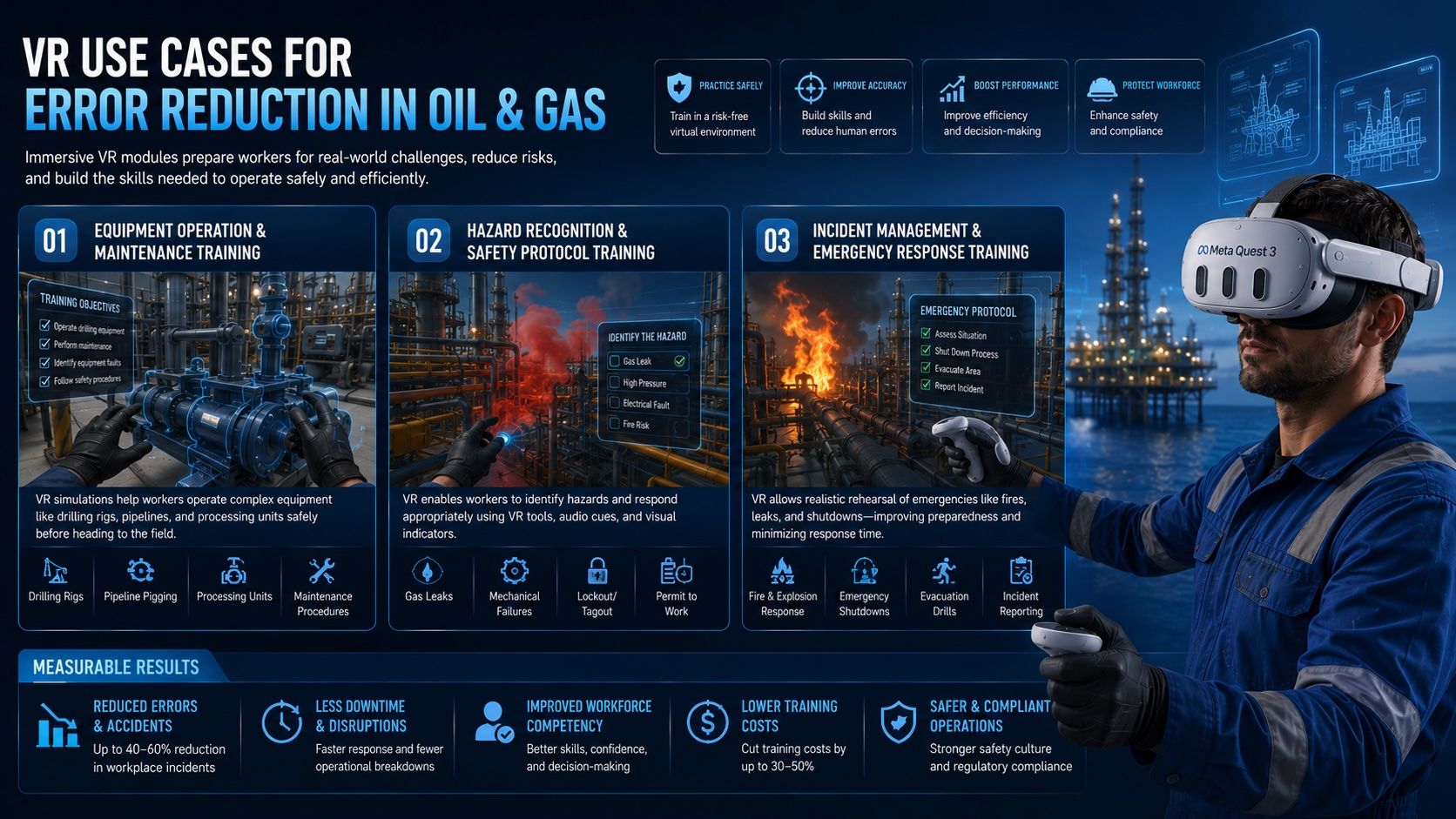
VR Use Cases for Error Reduction in Oil & Gas
A 2022 survey conducted by PwC in the US established that 51 percent of firms are either in the act of integrating VR into strategy or have already established VR into at least one purposeful business line.
Equipment Operation and Maintenance Training
Major oil and gas suppliers, such as Shell, BP, Chevron, and ExxonMobil, are employing VR simulations to educate staff members to operate large and complicated equipment like drilling rigs, pipelines, and production processing equipment, and how to do it safely, prior to being sent to the field. This simulation training aids in minimizing errors in actual maintenance operations. For example, rig equipment thermal imaging, pipeline pigging operations, production processing, and tube pulling maintenance operations are practiced.
Hazard Recognition and Safety Protocol Training
VR technologies can objectively determine how employees should recognize and react to hazards like gas leaks or mechanical failures. With visual indicators, auditory cues, and virtual tools, these hazards can be recognised. These safety training protocols have lockout processes, emergency response systems, and permit-to-work systems to identify oxygen levels and ensure atmospheric safety.
Incident Management and Response to Emergencies
The industry reports showed that the VR allows rehearsal of emergency cases (fires, evacuations, and abnormal shutdowns) in a risk-free environment, which makes employees better prepared and compliant with the safety measures. VR also provides similar training to all trainees across locations and teams on emergency response, as well as minimising the chances of errors in stressful situations. Through digital standard operating procedures, every employee can be assigned to the same VR modules.
Read More: How VR Simulations Are Transforming Oil and Gas Training and Onboarding
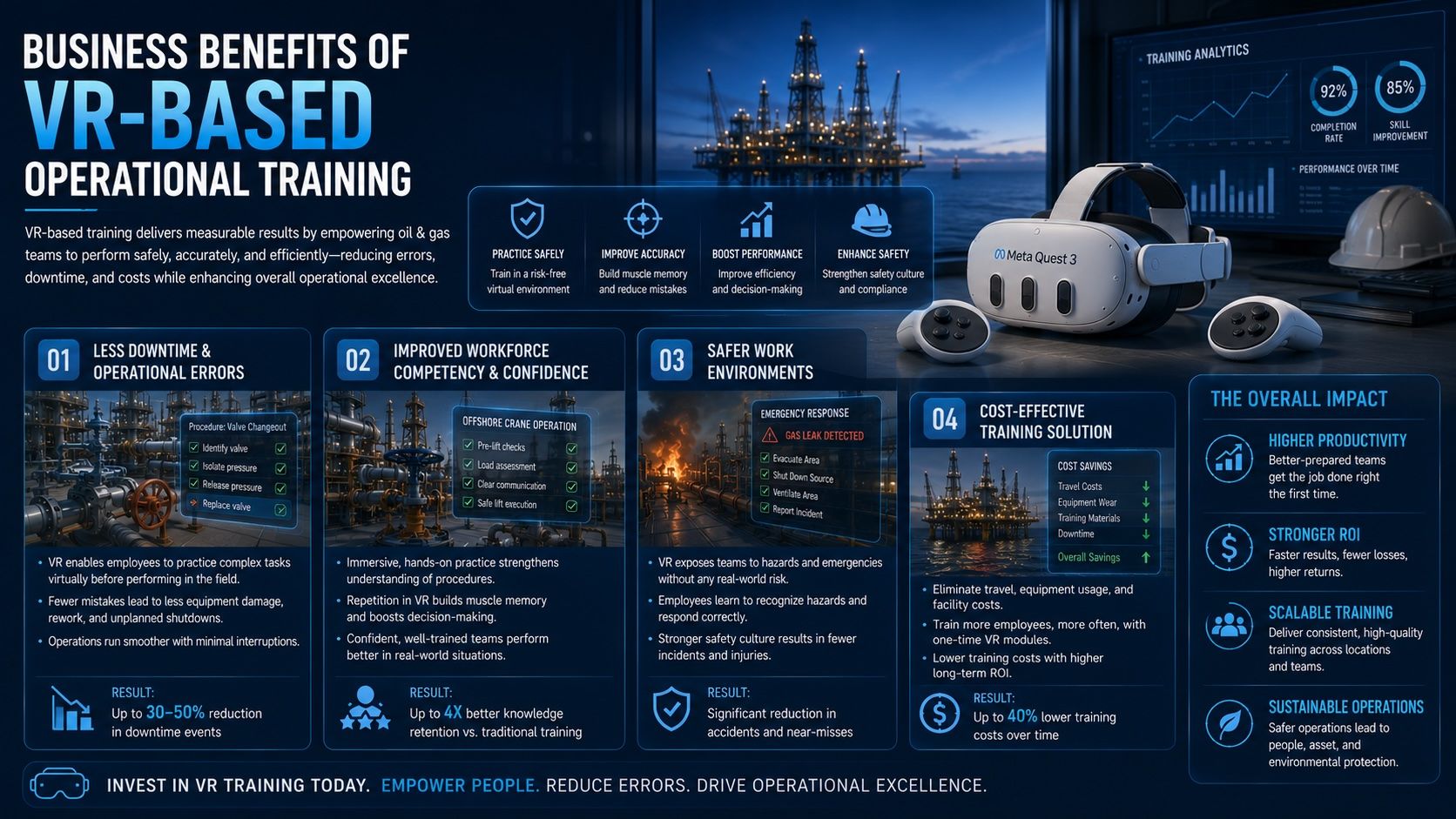
Business Benefits of VR-Based Operational Training
The benefits of VR-motivated operating training in the oil and gas industry are discussed further.
Less Downtime and operational errors
The VR training solutions used in the oil and gas industry allow employees to learn complex tasks in a safe, immersive virtual environment before they can handle real-life equipment. VR helps in minimising downtime by allowing employees to practice virtually on digital twins instead of live machines. This ensures tasks are completed quickly and also prevents expensive errors and sudden shutdowns.
Improved Workforce Competency and Confidence
VR modules allow procedures, emergency response, and equipment handling to be practiced repeatedly and in an immersive manner. Workers acquire more profound procedural knowledge and confidence by virtually subjecting the trainees to the real world. VR training is an affordable method of familiarizing personnel with dangerous conditions and complicated procedures to enhance preparedness and functionality.
Safer Work Environments
The virtual simulations enable the staff to practice hazard recognition, emergency shutdown, and response procedures without risking their lives. VR improves safety in the operation and assists in the development of safety procedures on the production facility, which is vital in reducing the incidences and contributing to a stronger work environment in oil and gas operations.
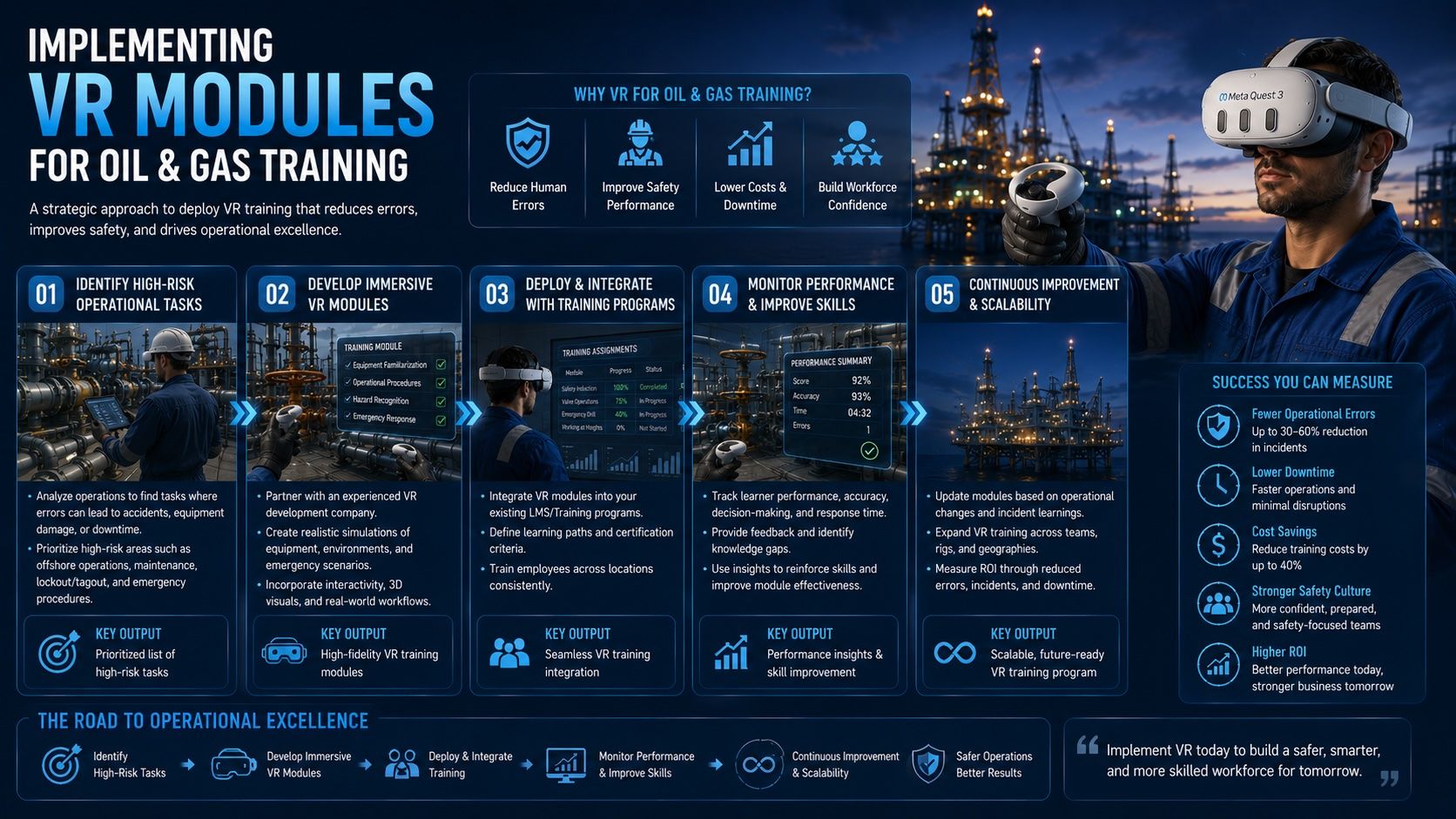
Implementing VR Modules for Oil & Gas Training
Certain factors should be considered in order to implement VR training modules in the oil and gas industry.
Identify High-Risk Operational Tasks
Begin with the most risky processes, such as offshore rig operations, emergency outages, and multifaceted equipment repairs, where mistakes lead to dangerous accidents or unproductive periods. Several oil and gas companies have already adopted VR in order to familiarize workers with such dangerous conditions and acclimate them safely before field deployment. This prioritisation will make sure that training is targeted in areas where it has the greatest impact in decreasing error and increasing safety.
Develop Immersive Training Modules
Collaborate with the top AR VR development company to create custom simulations that replicate functional locations, equipment, and emergency scenarios in a simulated way. High-fidelity VR modules like operational and process modules, maintenance and engineering modules, HSE and safety critical modules assist the trainees to experience procedures virtually, but with a real-life working situation feeling. These virtual demos reduce the risks and costs of training that are associated with live training activities.
Operational Performance and Improve Skills
The analytic optimisation of the VR sessions is useful in monitoring the accuracy of the tasks, decision-making, and response time. The digital twin-based AR for maintenance workflow has the potential to decrease the time of troubleshooting and shorten the downtime, and increase ROI.
Conclusion
The use of VR modules in the training of the oil and gas industry increases safety, minimizes operational mistakes, and improves the competence of the workforce due to the use of an immersive and repeatable practice. In order to develop custom solutions and achieve the greatest benefits, hire dedicated AR/VR developers from Aura Interact to bring a new level of operational excellence.