

How Healthcare Training Is Becoming More Effective with Virtual Reality Simulations
Medical education requires accuracy, uniformity, and practicality. The classical training models are based on observation, supervision, and limited clinical exposure. Such approaches establish a knowledge base, although they struggle to keep pace with the complexity of modern medicine.

Medical education requires accuracy, uniformity, and practicality. The classical training models are based on observation, supervision, and limited clinical exposure. Such approaches establish a knowledge base, although they struggle to keep pace with the complexity of modern medicine. Virtual reality is now a realistic training technology as opposed to sci-fi. VR provides experiential learning by placing learners in realistic and engaging situations without compromising patient safety. Hospitals, universities, and medical businesses are now turning to VR training solutions to close skills gaps, standardize learning, and enhance performance in clinical environments.
Challenges in Traditional Healthcare Training
Let’s look at the challenges in traditional healthcare training:
Limited Access to Real Patients and Surgical Cases
Training in medicine relies on being shown different cases. In fact, the conditions students and residents face tend to be very limited. Rare diseases, complex procedures, and high-risk operations will be seen once or not at all. Learning opportunities are decreased by time constraints, the availability of patients, and the workload in a hospital. This could lead to the graduation of trainees lacking adequate on-the-job training in life-threatening situations.
Risk and Ethical Constraints in Live Training
Some risks cannot be avoided in training on real patients. Malpractices in the process may cause complications, prolonged recovery, or even legal implications. Ethical principles curb the degree of autonomy a trainee may enjoy, particularly in invasive procedures. Supervisors are forced to step in at the very first stage, hence limiting the growth of skills independently. This produces a disconnect between theory and sure clinical practice.
Uneven Skill Development and Retention
Traditional training outcomes are highly diverse depending on mentors, institutions,s and exposure to cases. Two learners who took the same program may have significantly different levels of competence. Besides, skills that are rarely practised also deteriorate. Lack of repetition results in decreased retention, particularly in emergencies in which a quick and precise response under pressure is required.
Read More: How to Enhance Data Security in Virtual Reality Training Platforms
How Virtual Reality is Transforming Medical Education
Let us understand that virtual reality is transforming medical education:
Immersive Surgical Simulations and Anatomy Learning
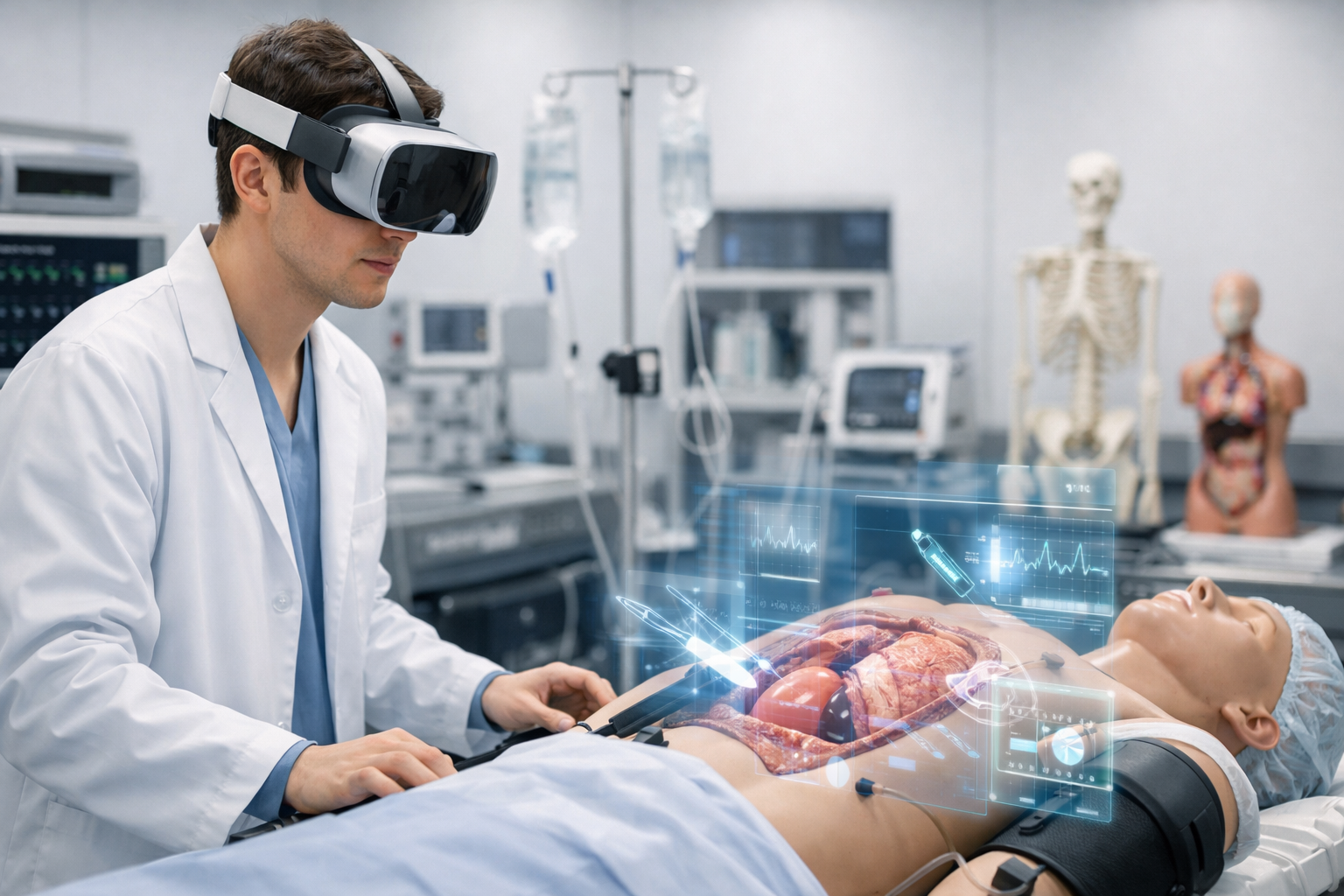
VR recreates operating rooms, anatomical structures, and procedural workflows in 3D detail. Students are able to study the anatomy in a step-by-step fashion, view the workings of the body, and practice surgery steps freed from spatial constraints. Compared to textbooks or videos, VR allows for the formation of depth perception and muscle memory. This virtual reality style helps in cognitive acquisition and development of psychomotor skills.
Real-Time Feedback and Error Analysis
Data-based feedback is one of VR's strongest benefits. Matched by simulations on the monitoring of the hand movements, instrument manipulation, time spent, and the frequency of errors, immediate performance metrics are provided to the trainees at the end of each session. Such objective analysis assists in identifying the weaknesses in time and countering specific improvement. The instructors also obtain uniform evaluation devices, as opposed to their use of simple subjective observation.
Safe, Repetitive Practice for Skill Mastery
In VR, this means the participants can practice as much as they wish without any harm to the patient or devices. Instances of error turn into learning processes and not incidents of significant issues. Such repetition enhances neural networks that are linked to procedural memory, which increases confidence and competence in actual clinical practices.
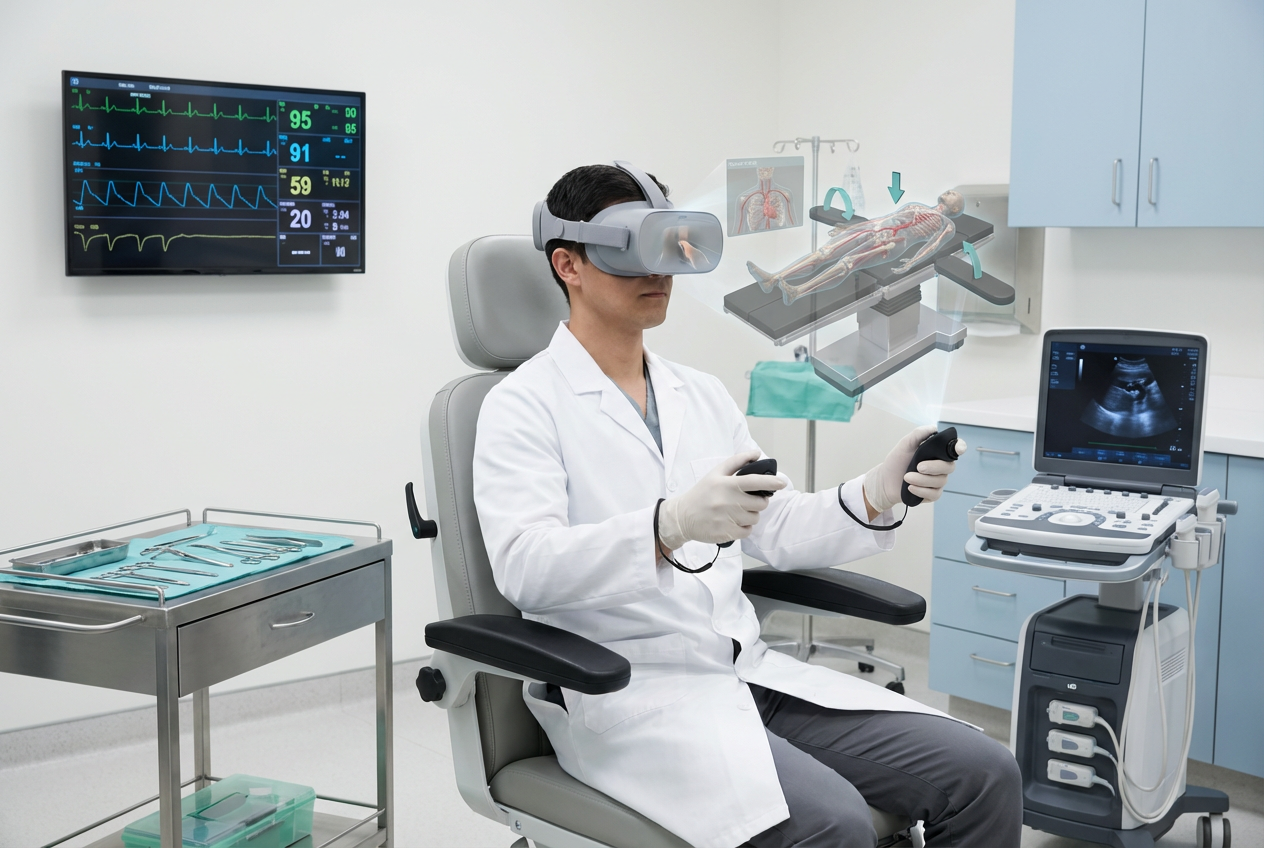
Applications of VR in Healthcare Training
Let us look at the applications of VR in healthcare:
Surgical Training and Procedure Rehearsals
Surgeons are practicing their actions in VR before getting into the operating room. Simulations are the reproduction of patient anatomy performed in an imaging-based simulation. It is a method that enhances preoperative protocols and minimises uncertainty during surgery. Top AR VR development companies have their systems integrated with advanced haptics to replicate the resistance of tissues and instrument response, which makes the work all the more realistic.
Emergency Response and Trauma Simulations
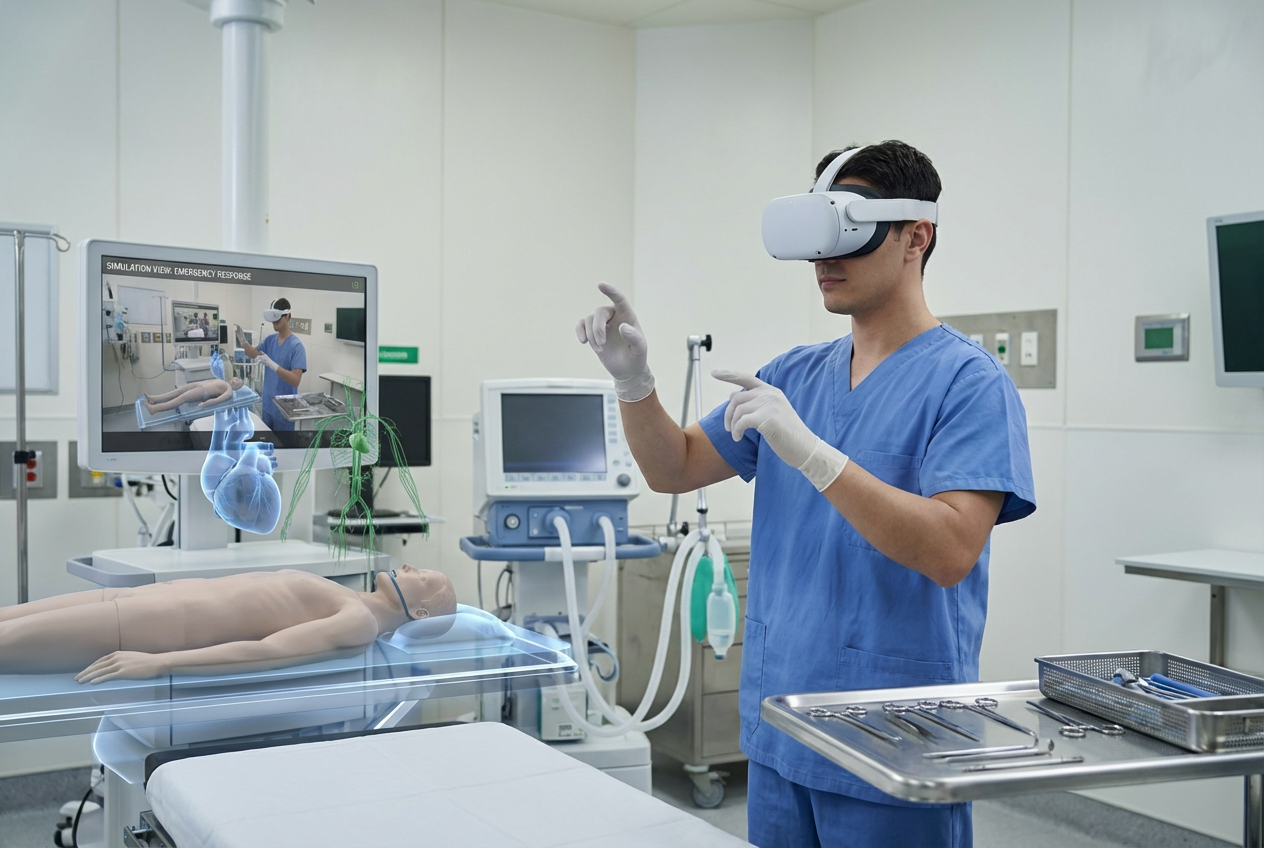
Medical emergencies involve the necessity of acting quickly under stress. VR recreates the mass casualties, cardiac arrestive situations, and trauma scenarios, which are hard to simulate safely in reality. Teams can exercise triage and communication practice, protocol adherence in controlled but artificial settings. Performance information helps make individual and team-based responses more precise.
Patient Interaction and Empathy Development
Technical skill is not the only way of clinical competence. VR experiences mimic patient dialogue, mental health testing, and end-of-life inquiries. Students interact with computerized patients that react emotionally and behave. These simulations build on the skills of communication, cultural sensitivity, and empathy, which are the essential pillars of patient-centered care.
Hospital Operations and Equipment Familiarization
HRs use VR in non-clinical training, such as equipment utilization, infection control, and optimization of work processes. New employees are able to get acquainted with equipment and schemes prior to going to dynamic settings. In combination with the Digital twin solutions for enterprises, VR models can simulate the real hospital infrastructure, and they aid training on operations and planning at the system level.
Read More: The Human Brain Loves 3D: Why Immersive Experiences Just Work
Business and Clinical Benefits
This section will explore the benefits of it:
Improved Clinical Accuracy and Patient Safety
Clinicians who are trained in VR prove to be more accurate in their procedures and lower in errors. Working in simulated conditions helps them in complicated cases and uncommon complications. This has a direct contribution to enhanced patient safety, fewer adverse events, and improved clinical outcomes.
Reduced Training Costs and Errors
The cost of introducing VR is high, but the expenses will be highly offset over the long run. Less use of cadavers, physical simulators, and frequent instructor-led lessons will reduce operational costs. And a reduced number of medical errors leads to reduced legal insurance expenses. Companies that embrace Gamified training development enhance deeper engagement and eliminate retraining requirements and the non-completion rates.
Scalable Learning for Medical Institutions and Enterprises
VR training modules are cost-effective in terms of location and learners. Standardized simulations imply skill learning uniformity irrespective of the location. To support customized environments, most institutions prefer AR/VR projects to be created using the Hire Unity 3D developers for AR/VR projects to create training systems that will grow in line with the increasing needs of the institutions.
How to Implement VR in Healthcare Training Programs
Let’s get to know how one can implement VR in healthcare programs:
Identify Training Gaps and Skill Priorities
Needs assessment is the first step towards successful implementation. The institutions should determine the procedures, skills, or working procedures that have high error levels or minimal exposure. Making these areas a priority will ensure that the areas where VR investments are made are those relating to performance gaps and not a novelty tool.
Choose a Trusted AR/VR Development Partner
Healthcare simulations require the laxity of clinical, regulatory, and strong software architecture. The use of expert developers will guarantee realistic modeling, data security, and compatibility of the system.
Integrate VR Modules into Existing LMS or Training Frameworks
VR is not meant to replace current education systems. Incorporation of simulations in the learning management systems contributes to tracking of progress, alignment of certification, and blended learning models. This incorporation will make VR training in line with institutional objectives and accreditation criteria.
Conclusion
Virtual reality is redefining healthcare training by offering immersive, repeatable, and safe learning environments. It addresses the limitations of traditional education models by improving skill exposure, consistency, and confidence.