

The Future of Enterprise Innovation with Digital Twin Solutions
Digital twin technology is no longer hype; it has become part of digital transformation strategies in many other types of industries.

Digital twin technology is no longer hype; it has become part of digital transformation strategies in many other types of industries. . Digital twin of a top AR VR development company can become ever more powerful, intelligent, and integrated as 2025 and onwards approaches, transforming everything from sustainability and urban planning to manufacturing and healthcare. It is anticipated that the size of the worldwide digital twin market would increase from USD 10.1 billion in 2023 to USD 110.1 billion by 2028. There will be a 61.3% compound annual growth rate (CAGR) in the industry from 2023 to 2028.
The Digital Twin future, the new trends that will define their future, and how companies can harness them to remain competitive in a data-intensive and hyperconnected world will be covered in this blog.
A Digital Twin: What Is It?
A digital twin is a virtual, real-time replica of a thing, system, or process. It simulates, predicts, and optimizes actual outcomes with sensor data, IoT sensors, AI, and machine learning.
Digital twin, unlike static models, form an intelligent feedback loop between the world and virtual space by continuously learning and evolving. The digital twin market is actually anticipated to grow at a 39.48% CAGR between 2022 and 2030.
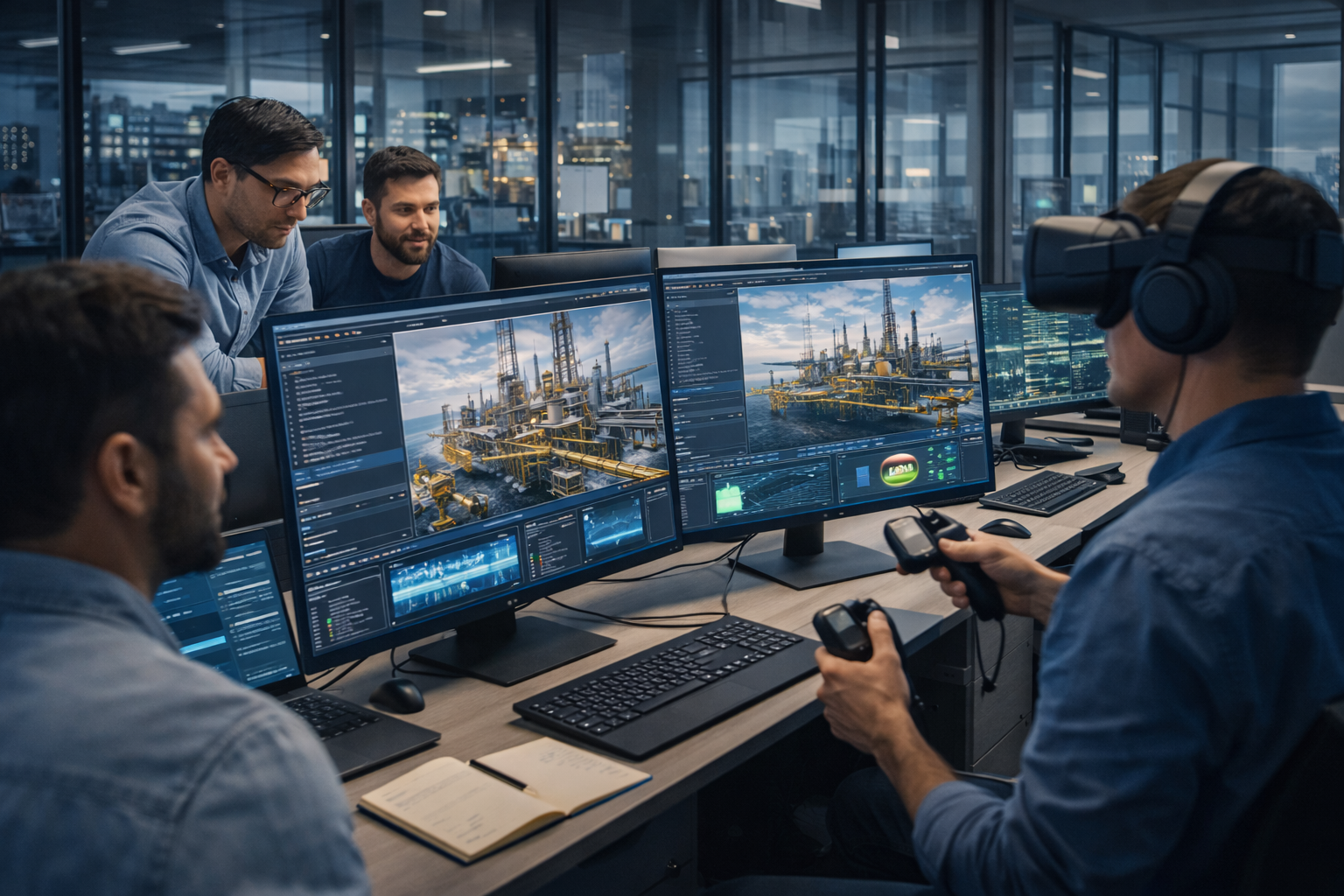
The Reasons for the Growing Adoption of Digital twin
Digital twin are also being used for an increasing number of uses like supply chain optimization, real-time monitoring, virtual design and testing, predictive maintenance, risk and performance management because businesses want to be smarter and are speeding up innovation cycles.
Read More: Spatial Computing is Here: Why It’s the Next Big Thing in Technology
Future of Enterprise Innovation with Digital Twin Solutions
Now let us look to the future:
AI-Driven Digital twin
Artificial intelligence is enabling digital twin capability. Digital twin are not only able to sense and simulate but, with AI and machine learning, can predict what is going to happen in the future and recommend preventive action.
AI-based twin, for example, are able to predict machine failures weeks ahead in manufacturing, cutting maintenance costs and downtime.
AI twin that evolve independently from inputs to become digital planners and advisors for operations must be implemented at mass scales.
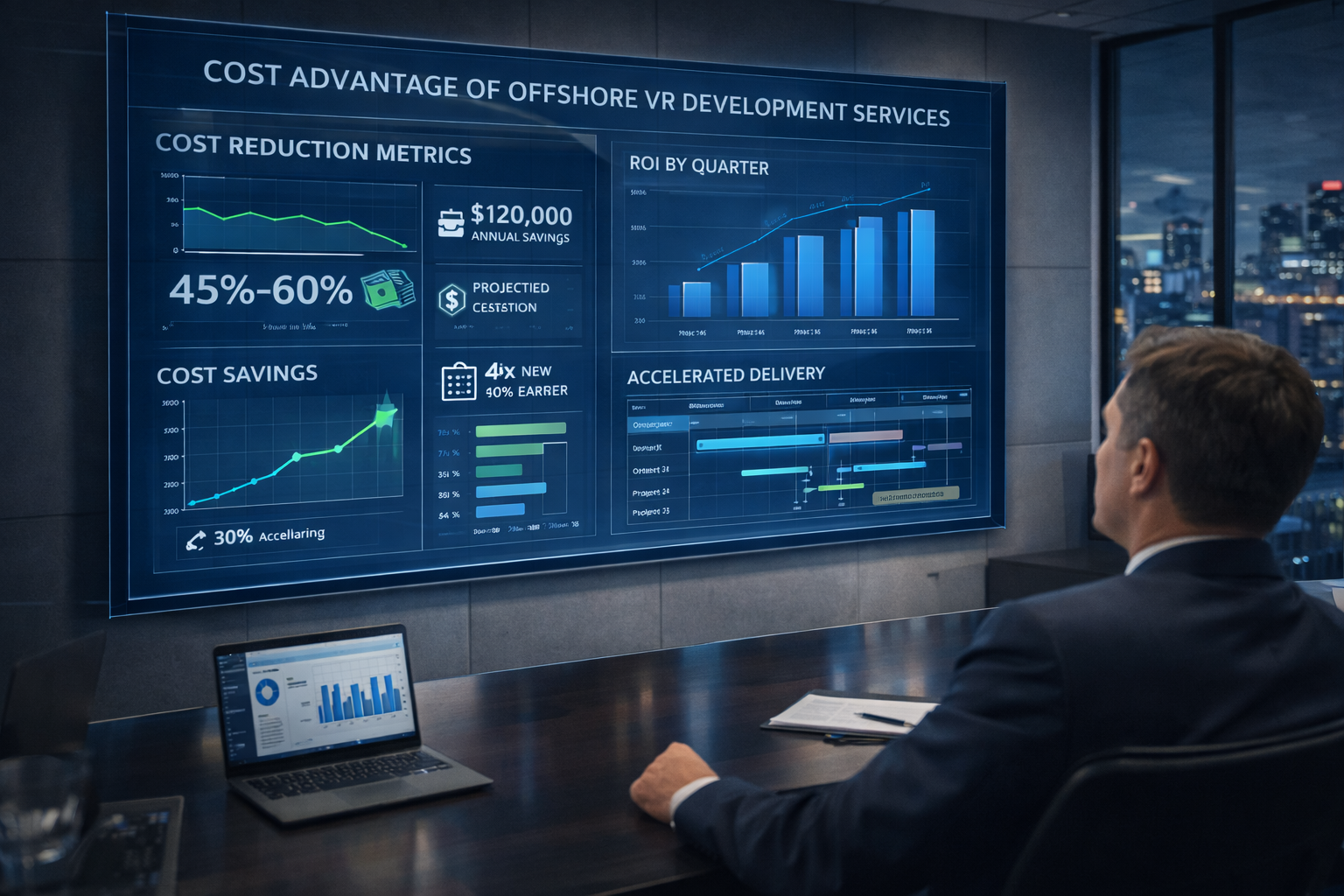
Organizational Digital twin
Businesses are now creating digital twin of entire organizations, or DTOs, and assets and equipment. twin give a macro-view of individuals, workflows, processes, and systems. Businesses can model their impact before making decisions such as people movements and supply chain adjustments. DTOs will dominate company digital planning, informing C-level decision-making with insight.
Transition to the Metaverse
Industrial metaverse platforms, replicating the real processes within immersive virtual three-dimensional worlds, increasingly depend on digital twin.
BMW is an example that utilized Nvidia's Omniverse to build a digital twin of its factory, where engineers could collaborate in real-time. Further digital twin will be found in virtual environments for remote collaboration, training, and simulation beyond 2025.
Integration of Edge Computing
Edge computing is increasingly becoming a necessity as digital twin are more real-time. It is now feasible to make decisions in real time without relying on centralized cloud designs since data is handled closer to the source (e.g., equipment or sensors).
It led to greater autonomy, lower latency, and faster response times. Digital twin will have applications at the edge for mission-critical uses like autonomous vehicles and smart grids.
Cloud-Native, Scalable Platforms
Implementation of digital twin is getting more scalable, cost-effective, and faster with cloud-native platforms offered by AR VR development company that develops apps. With AWS, Microsoft Azure, and Google Cloud technology, organizations can develop and integrate twin without any investment in infrastructure.
SMEs will also employ SaaS-based enterprise digital twin solutions for manufacturing, logistics, and facilities management as they grow in maturity. Cooperative twin ecosystems based on multi-tenancy are also being enabled through such solutions.
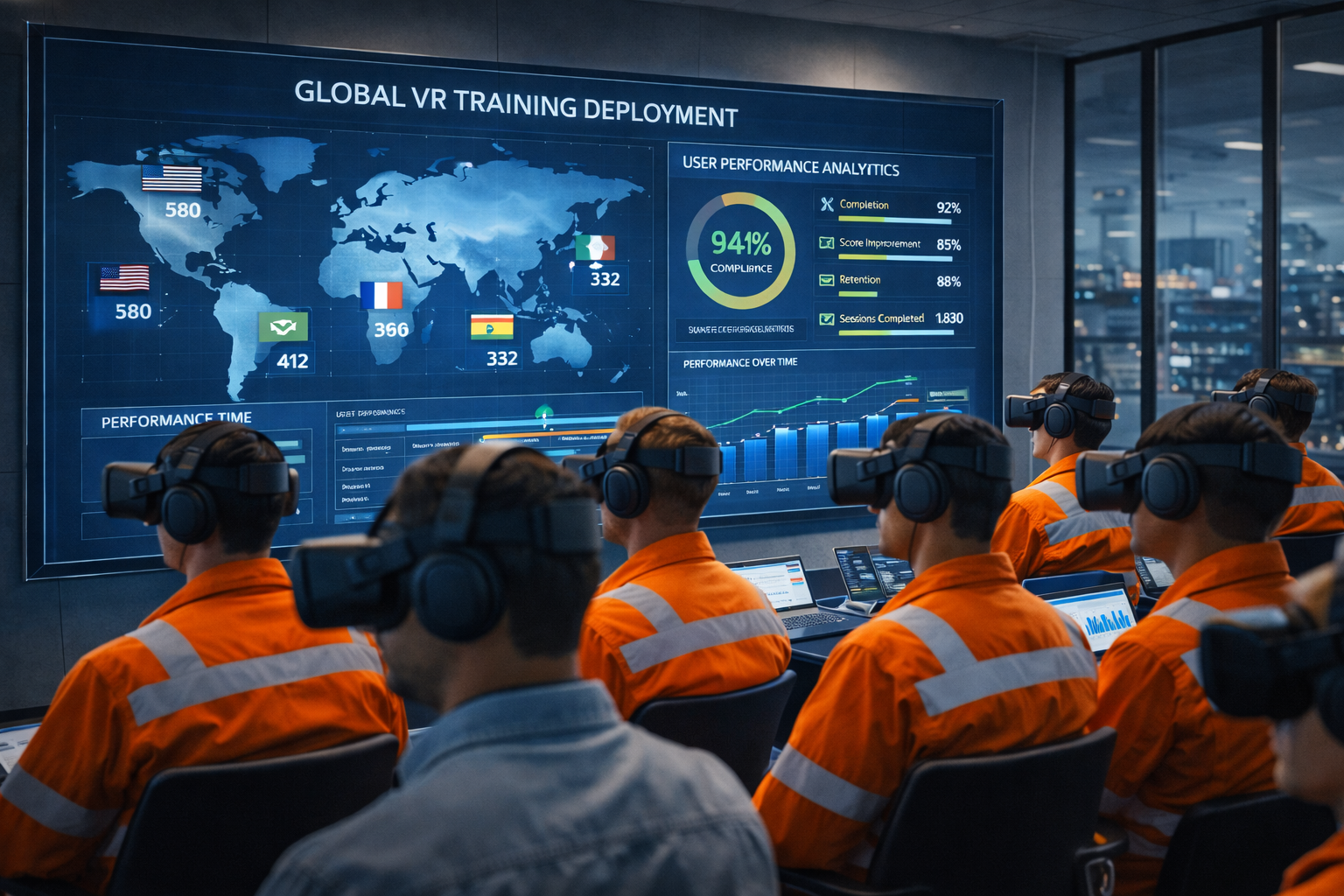
Climate Modeling and Sustainability
The enterprise digital twin solutions are increasingly being employed to forecast the environmental effects, improve energy efficiency, and enable sustainability initiatives as climate change is becoming a looming concern.
Urban digital twin are also utilized by cities such as Singapore to simulate air quality, energy usage, and traffic flows. In terms of carbon footprint estimates and resource utilization optimization, digital twin will be central to ESG initiatives.
Digital Twin Cybersecurity
Cybersecurity risk builds up with heightened connectivity. Security for digital twin will be a serious issue, specifically in sectors such as energy, defense, and healthcare.
Catastrophic consequences in the material world can be caused by threats such as identity spoofing, data theft, and twin tampering. Increasing emphasis will be placed on encrypted data layers, zero-trust architecture, and AI-based threat detection in digital twin platforms.
Interoperability and Standardization
One of the primary challenges is the lack of standard frameworks. But as digital twin increasingly find more usage, collaborations and industry associations are creating interoperable ecosystems.
It enables smoother integration between partners, suppliers, and functionally different departments.
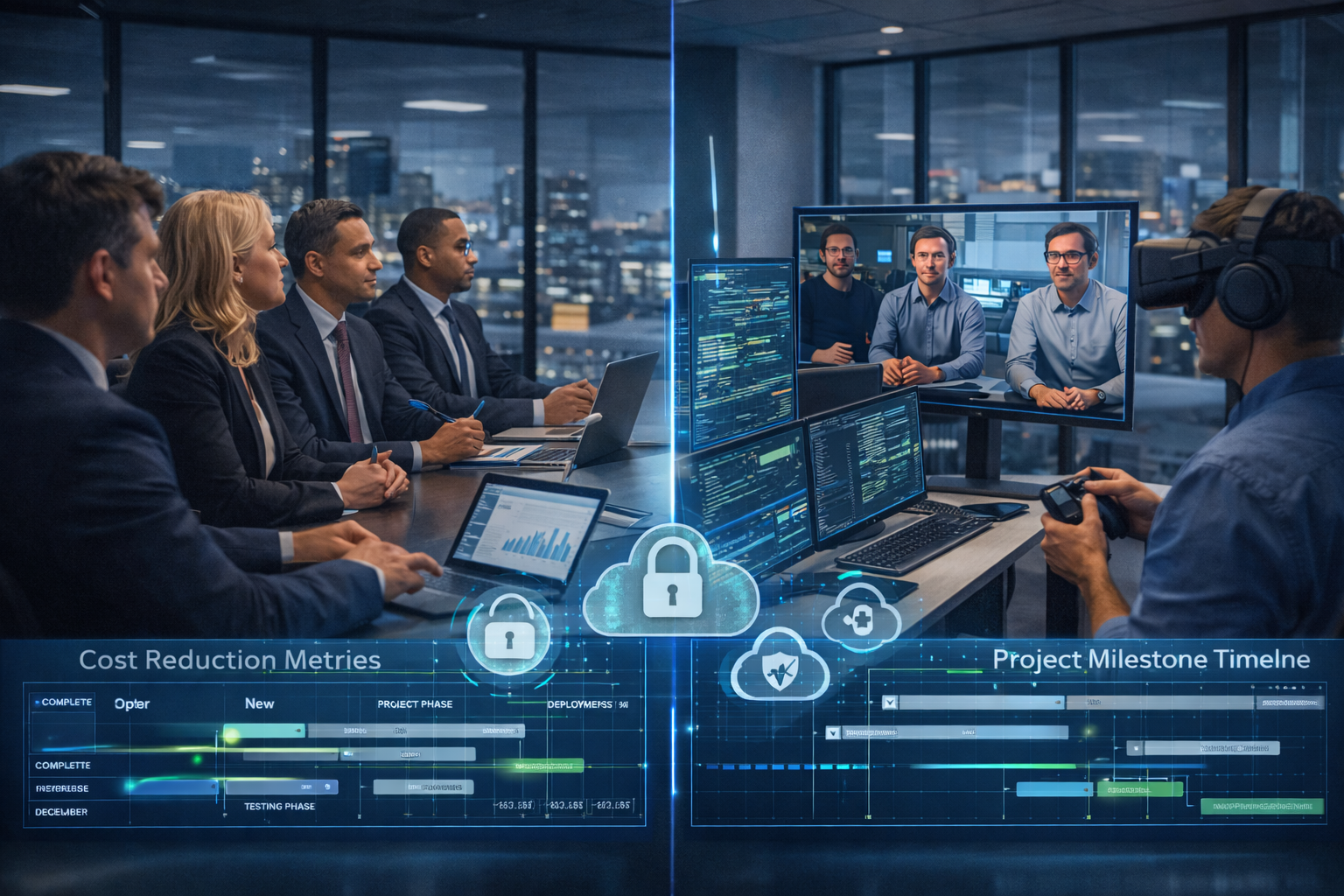
Expanding Applications in the Real World
Digital twin will be used by some industries for innovation as below:
Production:
Predictive digital twin solution for enterprises will be used by smart manufacturing for robotic coordination and quality checks.
Medical treatment:
Individualized digital twin for accurate medical treatment and surgical planning is forecasted.
Retailing industry:
Supply chain optimization and simulation of consumer behavior through twin models.
Automobile:
twin are used in combined automotive environments to aid remote diagnostics and vehicle engineering.
How Do We Prepare the Future of Digital twin?
Below are some suggestions for deploying digital twin technology in 2025, irrespective of the magnitude of your organization:
Define the High-Value Use Cases:
Begin small with resources or processes where ROI can be achieved through real-time analysis.
Invest in the Right Tech Stack:
Create a robust twin ecosystem by integrating cloud, edge computing, AI, and IoT platforms.
Create a good governance strategy:
Govern data lifecycle management, privacy, and security early on by establishing a governance strategy.
Upskill Your Teams:
Train staff members in digital twin simulation technologies, data science, and AI.
Read More: “Try Before You Buy”: How AR is Boosting Retail Sales by 40%
Conclusion:
Digital twin revolution has just begun. We are moving towards a world where physical and digital worlds merge into an ideal combination due to real-time computing, artificial intelligence, and immersive technology revolutions. In 2025 and beyond, digital twin-powered businesses will be able to realize new levels of sustainability, intelligence, and agility.
The implementation of digital twin can be sped up by partnering with top software development services if you are adopting new solutions or upgrading legacy systems. Expert development teams can help make your digital strategy a reality with everything from elastic infrastructure to custom integrations.