

Digital Twins in Manufacturing: Production, Maintenance & Quality Control Transformation
The production sector is entering a stage of industry where manufacturing processes are well integrated with both physical and digital intelligence. Digital twin technology has become one of the enablers of this change.

The production sector is entering a stage of industry where manufacturing processes are well integrated with both physical and digital intelligence. Digital twin technology has become one of the enablers of this change.
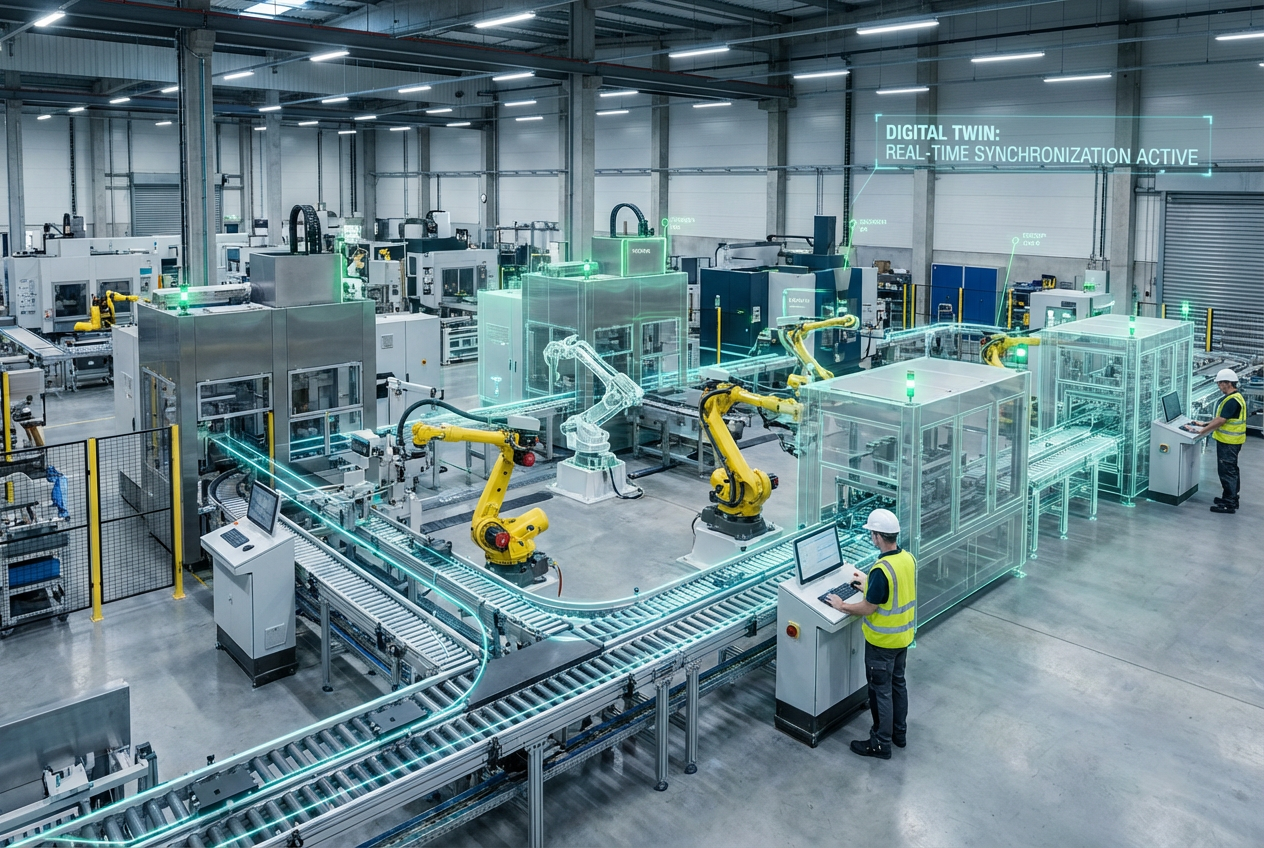
By making real-time access and control of complicated systems, manufacturers obtain real-time visibility and control of all assets or entire lines of production through creating a constantly synchronized virtual copy of physical ones. Digital twin solutions for enterprises are taking centre-stage in modern factories, facilitating transitioning through reactive to predictive and prescriptive decision-making.
The Manufacturing Industry’s Modern Challenges
Automation advances, according to manufacturing environments, still have structural and technological constraints in terms of efficiency and scalability.
Inefficient Maintenance and Downtime Issues
All the most important cost drivers in manufacturing include unplanned equipment failures. The old maintenance techniques are based on a set of predetermined schedules or an active response after failure. These methods do not consider real-time operating variables, vibration signatures, thermal stress, load variations, and component fatigue. This leads to unnecessary downtime, loss of production, and high cost of life cycle due to under-maintained or over-maintained assets in the event that there is no continual monitoring of the condition of assets.
Quality Control Gaps and Resource Wastage
Quality control is usually done at the end of production when defects have already been incorporated in the finished products. This is an aspect of late-stage detection that results in scrap rates, rework, and wastage of material. In production lines that are multi-stage and intricate, without constant visibility of the process, it is hard to identify quality deviations that can be traced to their sources, and this way, the defects are spread to the next batches.
Lack of Real-Time Data for Decision-Making
Many manufacturing organizations continue to have disjointed data structures. Machine data, sensor streams form part of IoT, and enterprise resource planning systems and supply chain platforms operate separately. This situation integration inhibits situational awareness on the factory floor. The decision-makers do not have real-time information on production performance, capacity utilization, and operational risk, which inhibits responsiveness and agility.
Read More: Why Forward-Thinking CEOs Are Investing in Digital Twin Solutions
Understanding Digital Twin Technology
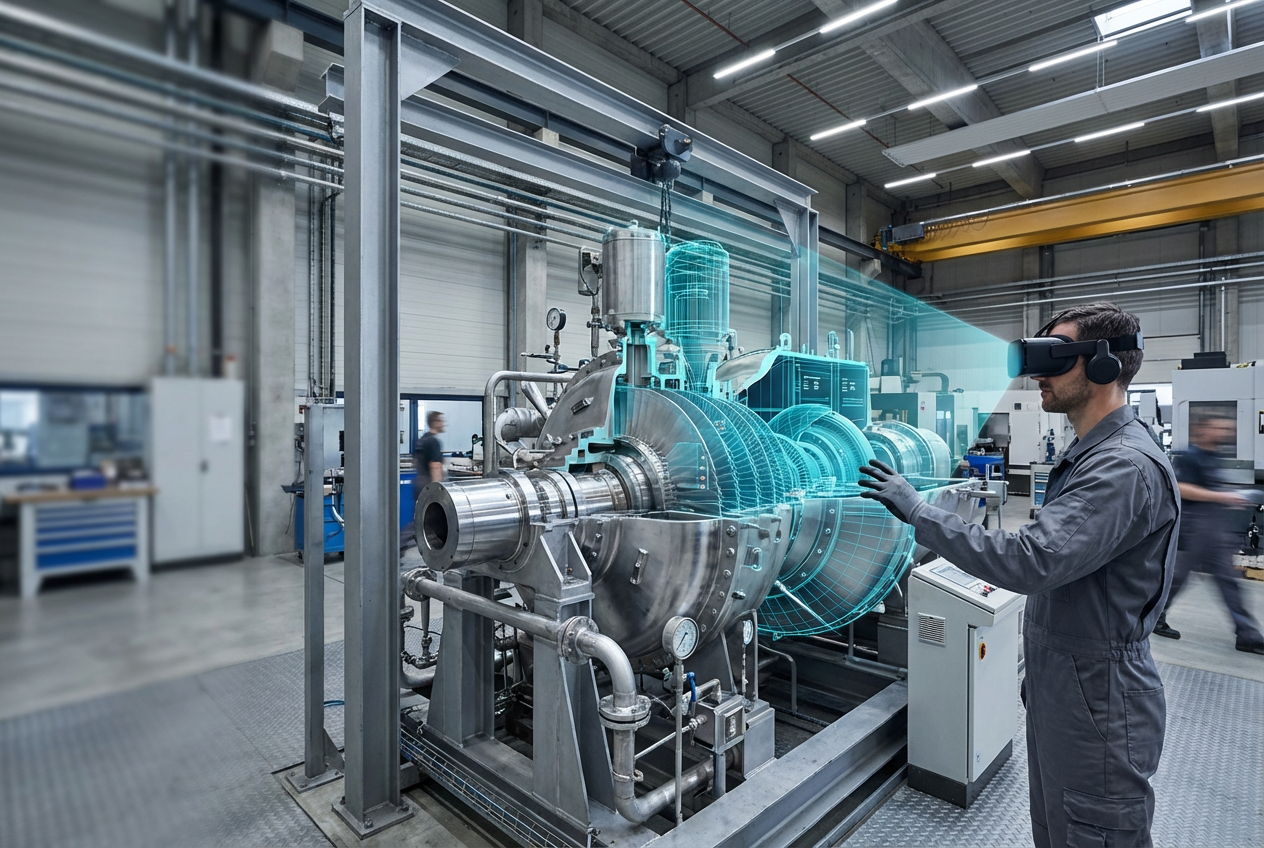
Digital twins solve these problems by integrating the real-world manufacturing systems with the smart virtual digital models.
What Are Digital Twins?
A digital twin is a high-fidelity computerized model of a tangible asset, procedure, or system that is constantly refreshed with real-time information. Digital twins are dynamic and develop together with their physical counterparts over the asset lifecycle, unlike the block of static block simulations. They record work behavior, environment, and performance measures.
How They Integrate with IoT and AI in Smart Manufacturing
The digital twins use industrial IoT sensors to acquire information about temperature, pressure, vibration, energy, and throughput. Such information is conveyed into the digital twin by secure edge and cloud systems. Finite element analysis and physics-based simulations are also used together with data-driven models to enhance accuracy, allow predictive maintenance, optimize processes, and test scenarios.
Applications of Digital Twins in Manufacturing
The use of digital twins cuts across various functional domains of the manufacturing organizations.
Production Process Optimization
Digital twins keep production processes in constant sight. Manufacturers are able to do simulations of line rearrangement, machine settings, or material transportation with live operations uninterrupted. Stagnant time, bottlenecks, and workload imbalance between the workstations are instantly visible, which makes the optimization of throughput time,cycle time, and energy efficiency possible.
Predictive Maintenance and Asset Management
Digital twins predict component degradation by viewing real-time sensor data as patterns of previous failures. The early warnings and actionable insights that the maintenance teams are provided with allow condition-based interventions. This decreases unintended downtime, stretches the life of assets, and increases the overall equipment efficiency.
Quality Assurance and Process Simulation
Digital twins also facilitate in-process quality assurance in that process parameters are directly connected to the quality results. Temp., pressure, or tooling offsets are easily detected and eliminated close to real time. Using virtual process simulations enables manufacturers to experiment with new materials, designs, or working conditions before physical execution, and reduce defect rate and speed up validation cycles.
Workforce Training and Remote Monitoring
Digital twins are further used to enable the workforce. Immersive environments created based on digital twin models can be used to provide Virtual reality training for manufacturing, which provides the operators and technicians with an opportunity to get used to the procedures on the correct replicas of the equipment.
Read More: The Future of Enterprise Innovation with Digital Twin Solutions
Key Benefits for Manufacturing Enterprises
Digital twins do not simply offer direct benefits to operations.
Reduced Downtime and Operational Costs
Proactive interventions in the form of predictive insights will help to prevent the failure of equipment and production standstill. Refined maintenance leads to lower labour cost, stock in inventory of spare parts,s and repairs during emergencies, leading to cost savings in the long run throughout the manufacturing activity.
Improved Product Quality and Innovation Speed
Simulation and constant monitoring enhance the stability and consistency of the processes. Virtual environments can enable manufacturers to quickly experiment with new designs or configurations, lowering time-to-market and, at the same time, minimizing operational risk.
Data-Driven Decision Making and Forecasting
Digital twins consolidate machine information, sensor feeds, and business systems into one operational process. Innovative analytics is used to aid in demand forecasting, capacity planning, and risk assessment. Strategic decisions can be simulated through scenario-based models with the help of simulations instead of reports that executives have to be presented with.
How to Implement Digital Twin Solutions Effectively
Successful execution has to be properly planned and aligned at the technical level.
Identify Suitable Production Lines or Equipment
All assets do not need to be deployed to a digital twin at once. Equipment with high-value, high-risk, or high-utilization tends to work best in terms of combating the best or high-value payoff. Pilot implementation using key production areas enables organizations to test assumptions and perfect models before scaling.
Partner with an Experienced Development Company
Digital twins that are enterprise-grade demand knowledge in 3D modelling, industrial protocols, data integration, and real-time analytics. The cooperation with one of the Top AR VR development companies will provide appropriate modeling, performance optimization, and reliable system architecture. When organizations hire Unity 3D developers for AR/VR projects, they acquire sophisticated visualization, modeling, and interactive training functions that enhance usability by both technical and non-technical stakeholders.
Integrate with Existing Systems and Scale Enterprise-Wide
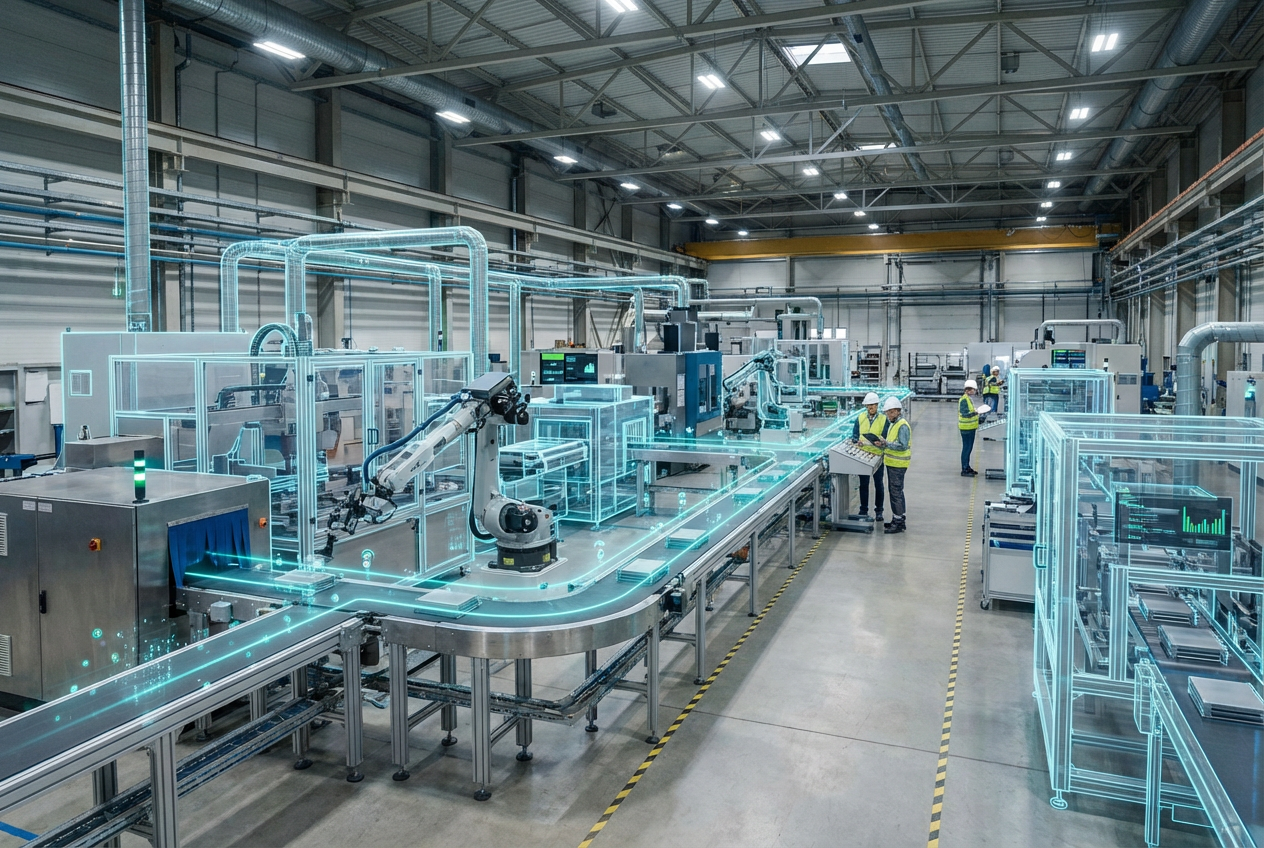
Digital twins are connected with manufacturing execution solutions, enterprise resource planning solutions, and analytics. Multi-site scalability can be done using cloud-native. With a growing adoption, digital twins may be expanded to suppliers and logistics partners to make the full operations externally visible. Gamified training development can be used to support structured programs that can strengthen the adoption of the workforce.
Conclusion
Digital twins are transforming the way manufacturers are designing, running, and optimising production spaces. With integrated real-time measurements, powerful analytics, and immersive visualization capabilities, the digital twin technology moves maintenance to the predictive category rather than reactive, the quality control to the proactive category instead of the corrective one, and the decision-making to the data-driven one instead of the intuition-driven one. To manufacturing leaders and CTOs, digital twins are a core capability in the construction of resilient, intelligent, and futuristic factories.