

How Digital Twin in Oil & Gas Enhances Asset Management and Inspection
* [Services](/blog/digital-twin-oil-gas-asset-management-inspection) * [VR Development Service](/service/immersive-vr-app-development-for-real...
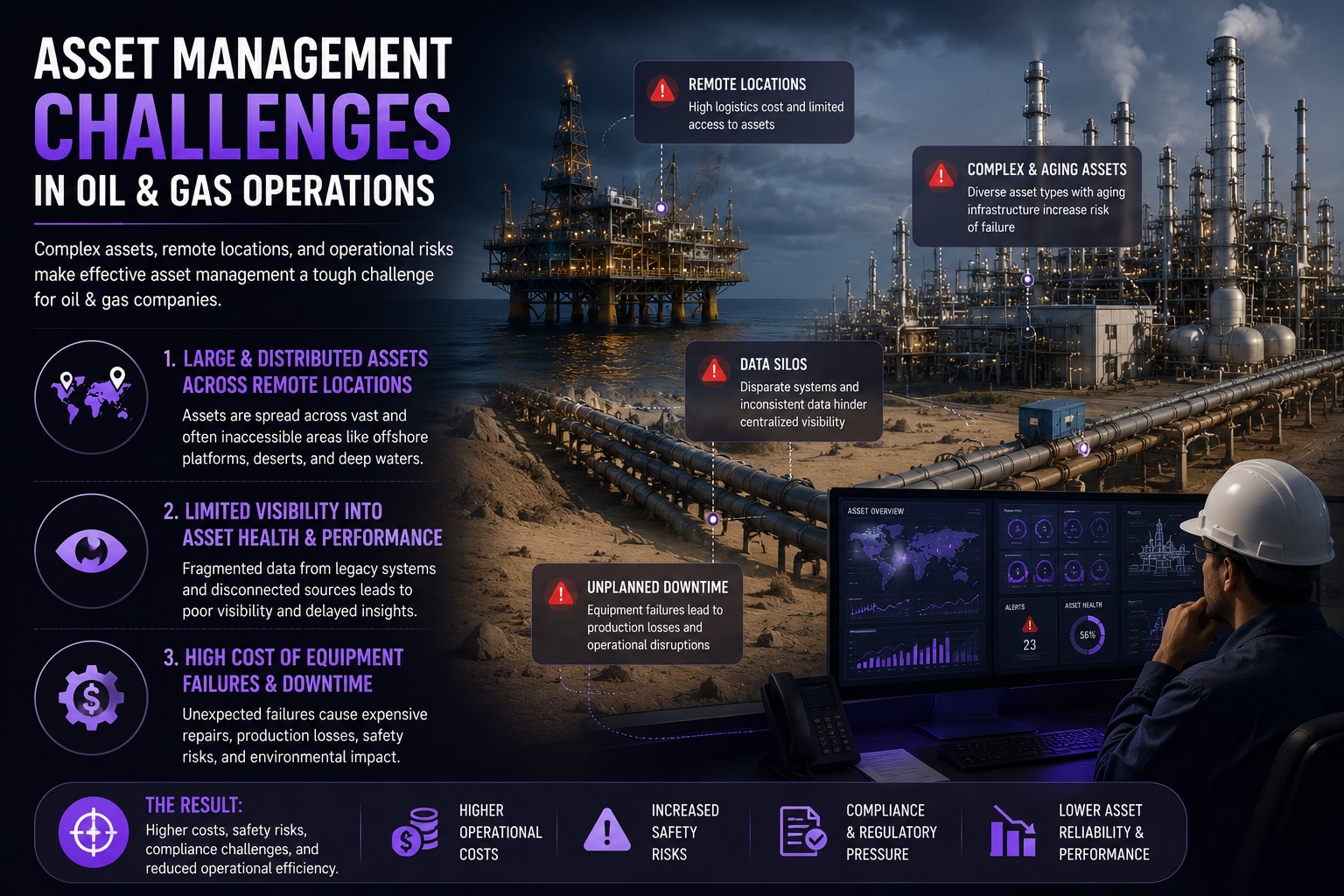
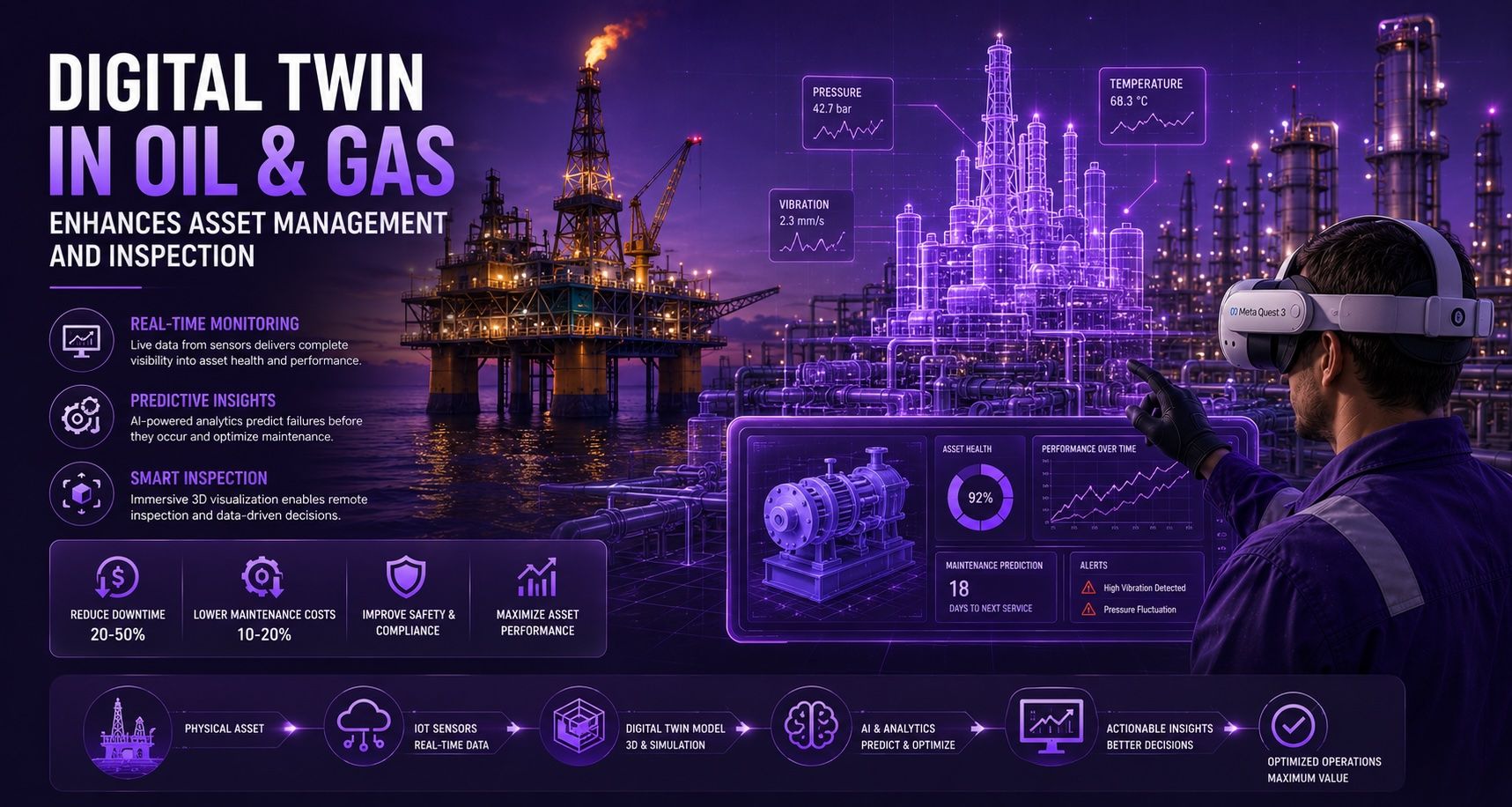 The oil and gas industry works in a complex and asset-intensive environment. Managing distributed assets like offshore rigs and refineries efficiently is a consistent challenge. Companies are turning toward the use of digital twins to improve this efficiency and reduce costs. A digital twin is a virtual representation of a physical asset or system. It updates constantly using real-time data and historical inputs, as well as advanced analytics.
They are known to reduce unplanned downtime by 20-50%, while lowering maintenance costs by 10-20%. This shows its tangible effect on operational efficiency. This article looks further into how digital twins help this industry.
Asset Management Challenges in Oil & Gas Operations
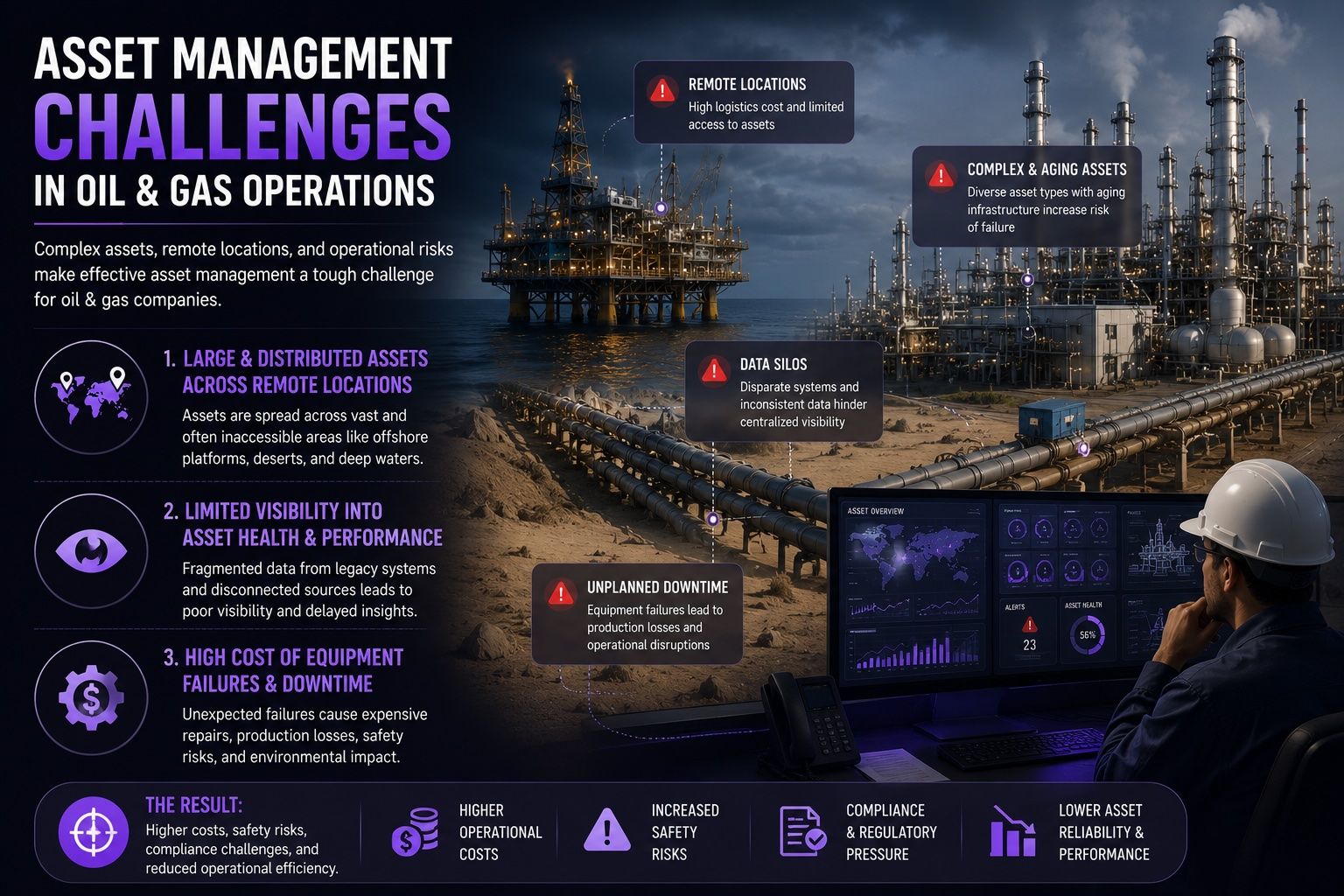
There are multiple asset management challenges in oil and gas companies:
Large and Distributed Industrial Assets Across Remote Locations
There is extensive oil and gas infrastructure on a geographical basis. It is typically situated in isolated or insecure locations, such as offshore platforms as well as deserts or even in deep water platforms. The control of these assets requires continuous control and coordination of various sites. This distribution adds to the logistical complication.
Limited Visibility into Asset Health and Performance
Several of the operators have problems with fragmented data systems in cases where sensor data and maintenance logs are distributed haphazardly. Without a single perspective, it is more difficult to evaluate the health of assets. This type of invisibility normally results in slow decision-making and operational inefficiency.
High Cost of Equipment Failures and Unplanned Downtime
Malfunctions of equipment used in oil and gas activities may result in huge financial losses and even insecurity. Unplanned downtime disrupts production and escalates the repair expenses and risks. Millions of dollars per incident are already known to be the result of downtime in this industry.
Limitations of Traditional Asset Inspection and Monitoring
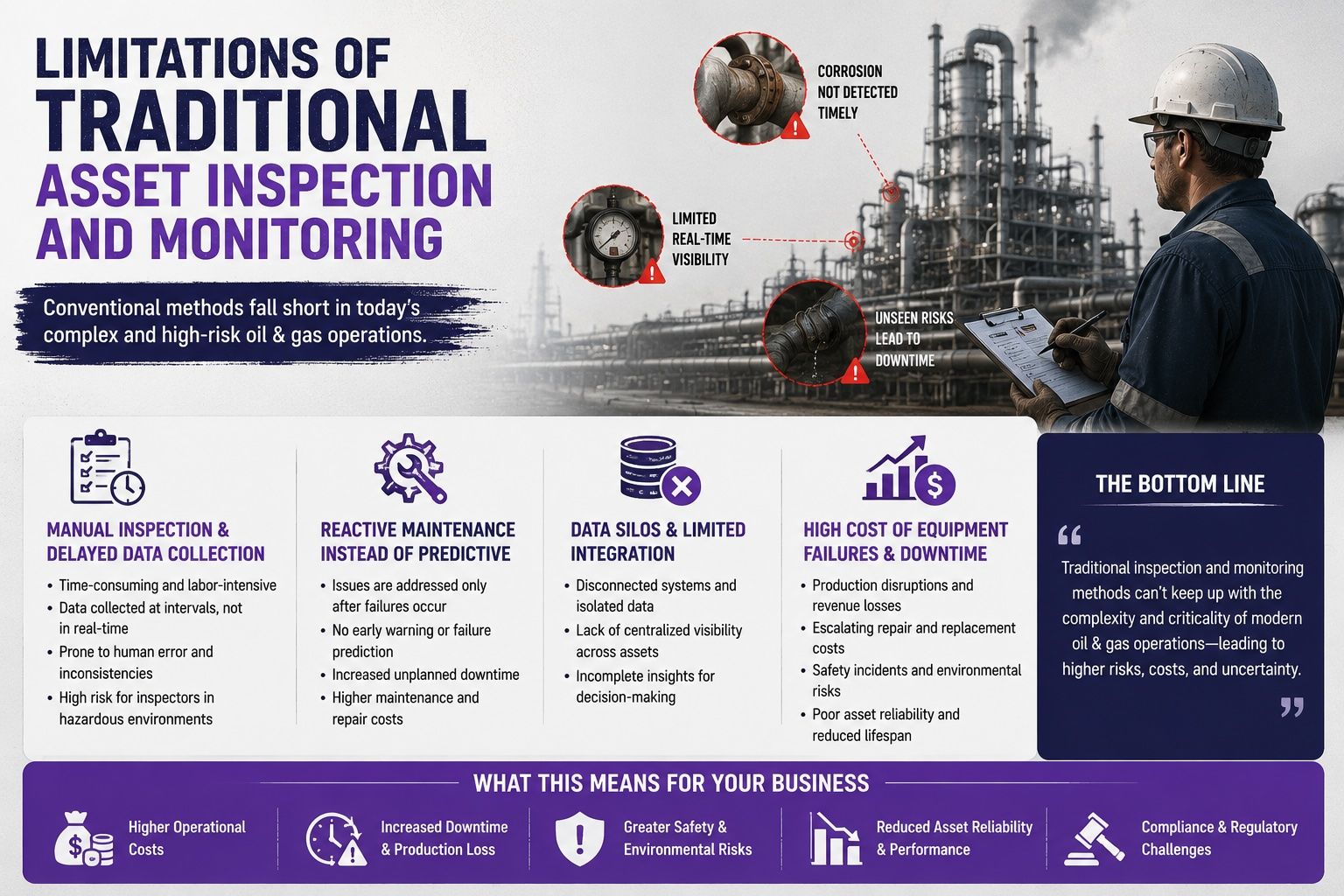
These are the limitations of traditional asset inspection and monitoring:
Manual Inspection and Delayed Data Collection
Conventional methods of inspection require a lot of manual work. In this case, technicians check equipment physically at predetermined periods. These examinations are time consuming and expensive. In addition, they would tend to be hazardous where the risk is high. The information gathered even in this case is not quite real-time, and this leads to the delay in the discovery of actual problems.
Reactive Maintenance Instead of Predictive Maintenance
The traditional methods of maintenance are mostly reactive. These solve the issues once they occur. This approach will raise downtime and repair expenses. The operators will be unable to predict failures or optimize maintenance schedules effectively without predictive insights.
Understanding Digital Twin Technology in Oil & Gas
Let us now understand digital twin technology in oil and gas:
What is a Digital Twin in Industrial Operations?
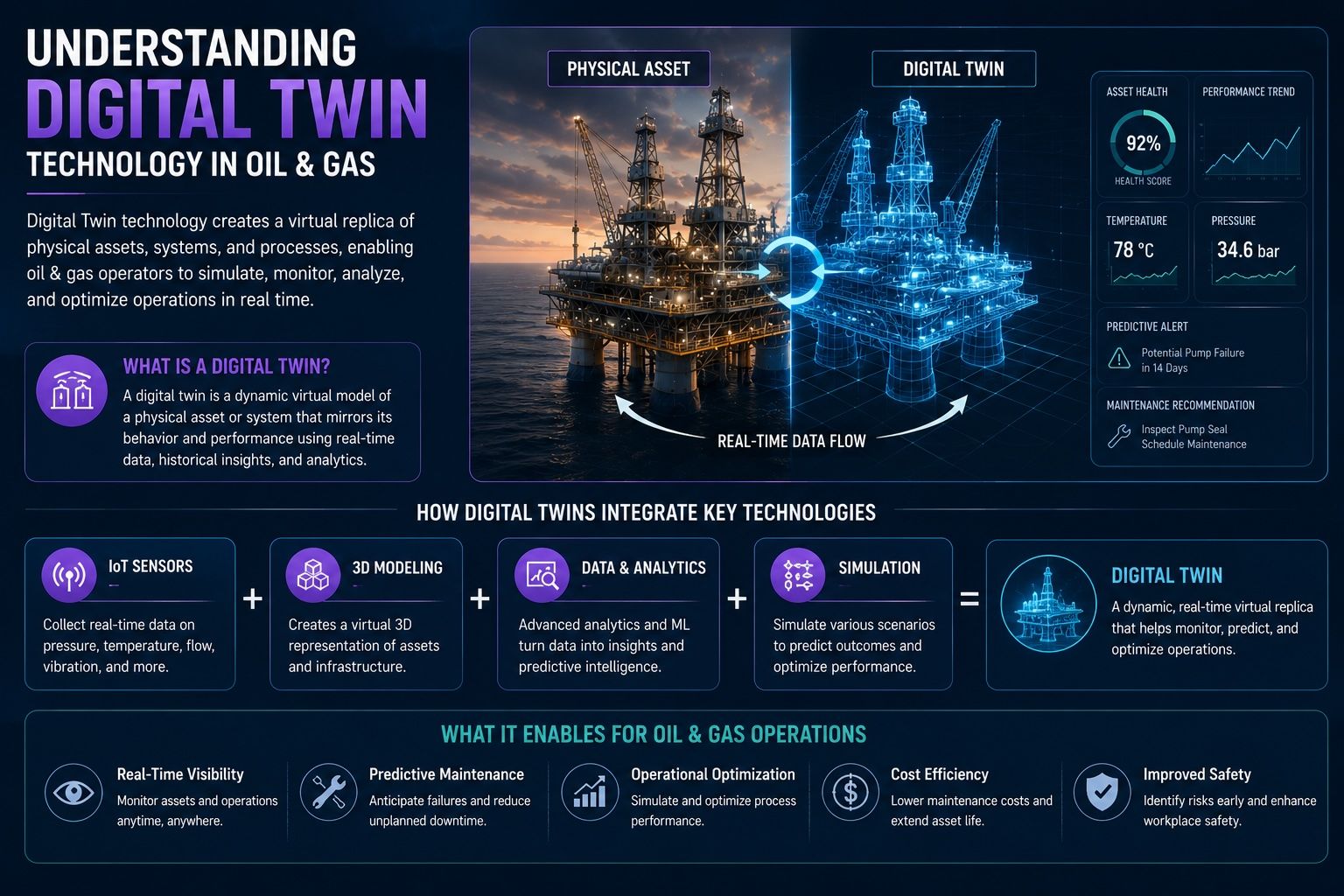
A digital twin is a multifunctional digital model of a real object, system or process. It presents the real-life conditions with real-time data. It assembles sensor measurements and working data, and sophisticated analytics to create behavior and forecast results.
How Digital Twins Integrate IoT Data, 3D Models, and Analytics
Digital twins combine various technologies to give actionable information. They possess IoT sensors that can gather real-time information on equipment and infrastructure. Then there are further 3D models that provide the visual representation of assets to better understand. They also possess analytics and AI to do data processing to predict failure and optimize performance.
How Digital Twins Improve Asset Management and Inspection
Here is how digital twins improve asset management and inspections:
Real-Time Monitoring of Critical Equipment and Infrastructure
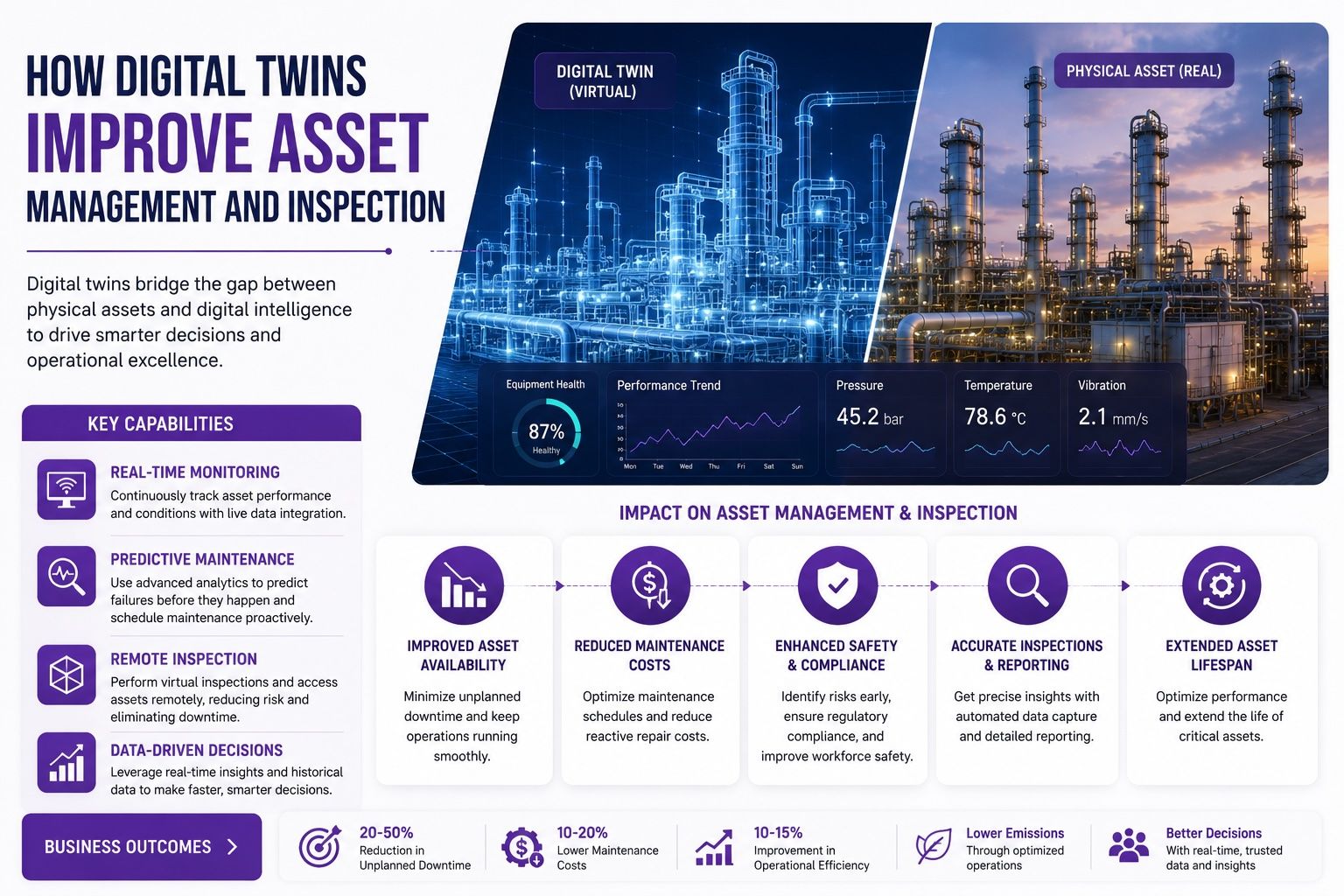
Digital twins provide the opportunity to monitor the assets all the time as they gather and process real-time data. Not only can the operators monitor the metrics of the performance and identify the anomalies but also react in a timely manner to the possible problems. This will minimize the reliance on periodical inspection and enhance visibility of operations.
Predictive Maintenance Through Data-Driven Insights
One beneficial feature of digital twins is predictive maintenance. Through the analysis of historical and real-time data, digital twins will be able to predict the equipment failure even before it happens. This demonstrates to operators the way to plan maintenance properly and minimize downtimes. It is not new that predictive maintenance in digital twins can be used to increase the life of equipment and enhance reliability.
Remote Inspection and Interactive Asset Visualization
Digital twins give immersive 3D environments that help engineers to inspect assets remotely. Companies that hire Unity 3D developers for AR/VR projects can get virtual models suited to their assets. This ensures asset safety without requiring physical presence. This is especially important for offshore and harmful locations, places where inspections are costly and risky.
Key Applications of Digital Twin in Oil & Gas Operations
The following are the key applications of digital twins in oil and gas operations:
Monitoring Pipelines, Refineries, and Offshore Platforms
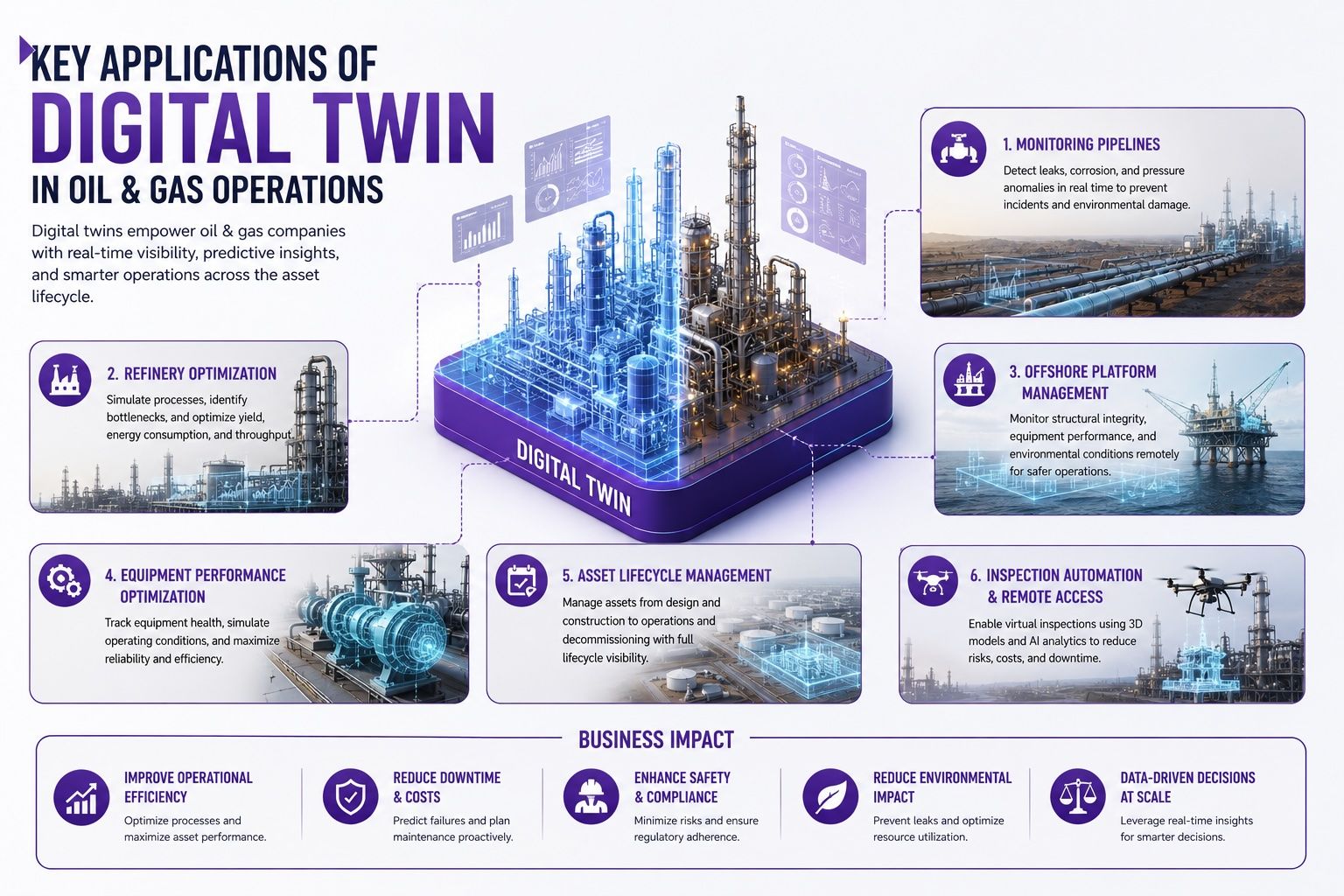
Digital twin solutions for enterprises are usually used to monitor critical infrastructure like pipelines and refineries. They can find out leaks and pressure anomalies, along with structural issues, all in real-time. This helps prevent accidents and environmental damage.
Equipment Performance Optimization and Maintenance Planning
Digital twins can be used to ensure the optimization of equipment performance by modeling different operating conditions. The operators have the ability to test a number of conditions and identify the most effective production and maintenance strategies.
Asset Lifecycle Management and Inspection Automation
Digital twins take the entire lifecycle of assets, including design and building, operation, and dismantling. They permit inspection that is automated. These are to ensure that the maintenance decisions are made based on the correct data.
Business Benefits for Oil & Gas Enterprises
Digital twins also have business benefits for oil and gas enterprises:
Reduced Downtime and Maintenance Costs
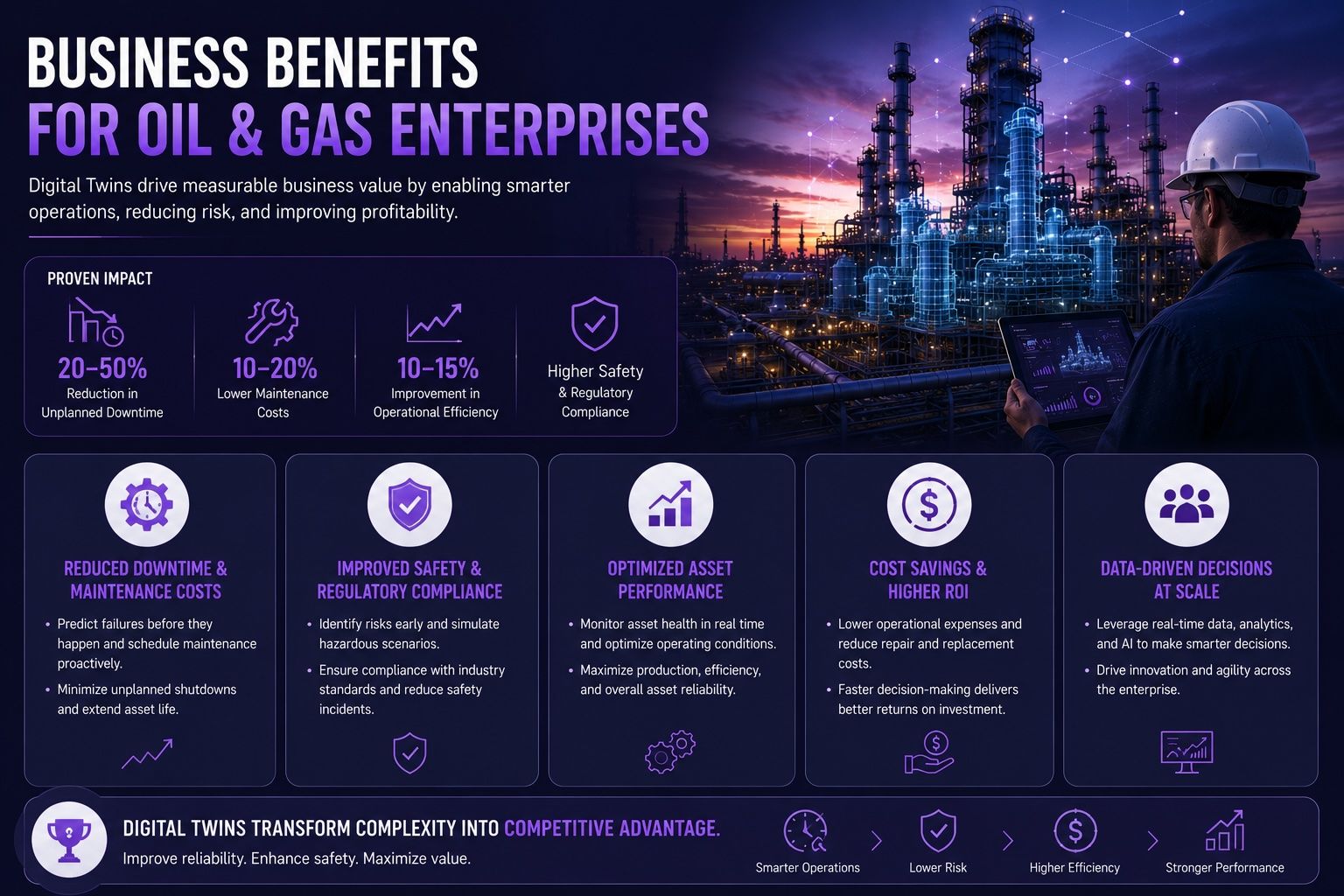
Digital twins crucially reduce unplanned downtime. They do so by allowing predictive maintenance. Industry estimates show downtime reduction of up to 50%, as well as notable decreases in maintenance costs.
Improved Safety and Regulatory Compliance
The issue of safety becomes critical in the oil and gas operations. Digital twins assist companies in simulating risky situations and enhance emergency preparedness. They also assist in checking the regulatory requirements because they allow for correct data.
Data-Driven Decision Making for Asset Performance
Availability of real-time insights and predictive analytics would help decision-makers to optimize operations and enhance asset performance. This type of change in data-based rather than intuition-based decision making makes the process more efficient and competitive.
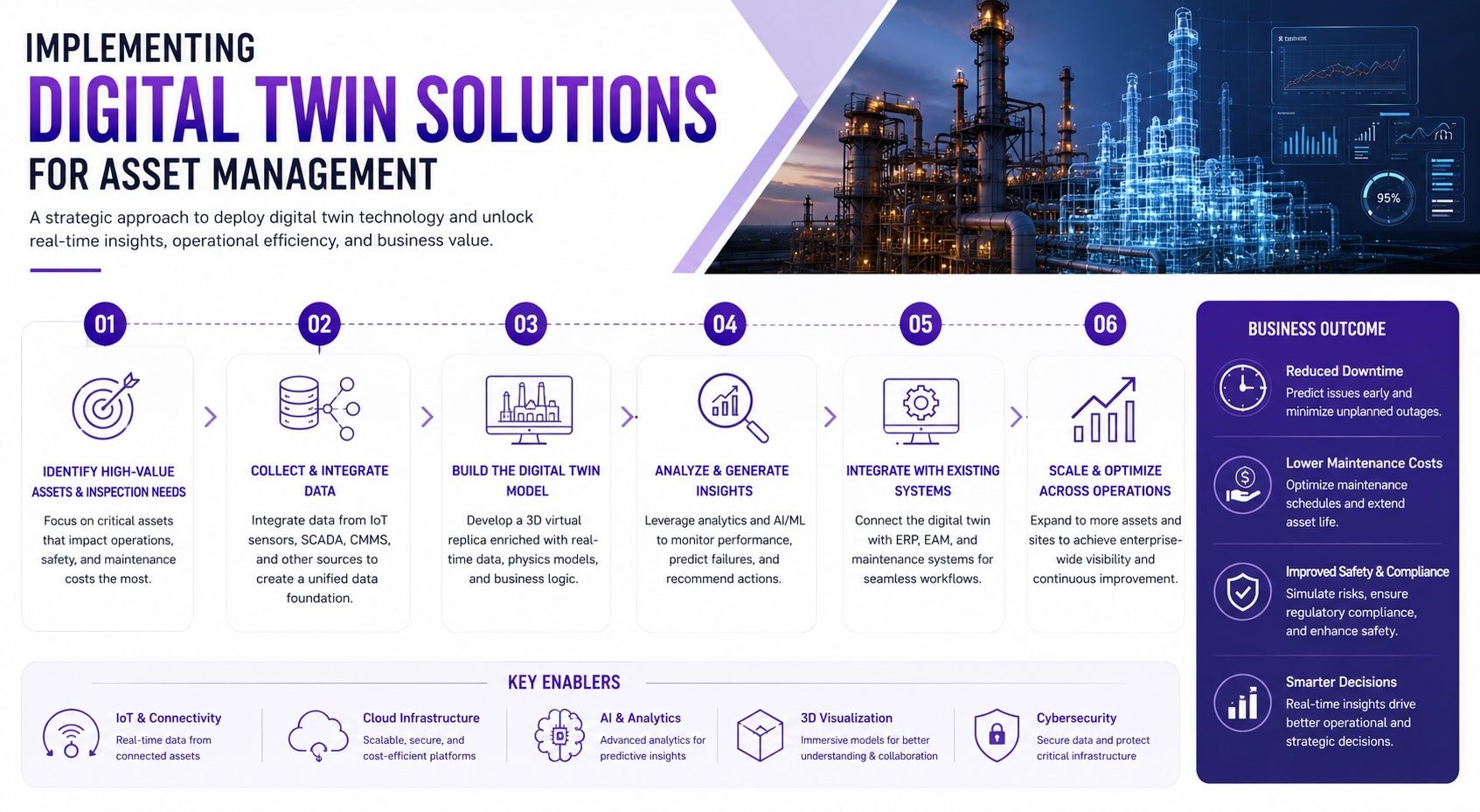
Implementing Digital Twin Solutions for Asset Management
Here is how digital twin solutions are implemented for asset management:
Identify High-Value Assets and Inspection Needs
The initial action to take in the setting of digital twin technology is to identify the valuable assets that require internal surveillance at all times. It is important that companies focus on those assets that have the greatest influence on operations and maintenance costs.
Integrate Digital Twins with Existing Monitoring Systems
Effective implementation would require effective integration with current systems, such as SCADA and IoT solutions, and enterprise asset management systems. This enables the creation of a unified data ecosystem and adds digital twins value.
Scale Across Operations for Enterprise-Wide Visibility
Digital twins can be scaled across various assets and facilities to give enterprise-wide visibility after implementation. Organizations usually explore solutions while integrating asset visualization platforms to ensure long-term ROI at this stage. Some even extend their digital twin capabilities into workforce enablement, making use of virtual reality training for manufacturing and gamified training development to simulate real-world scenarios.
Conclusion
Digital twin technology is changing asset management and inspection in the oil and gas industry. Its predictive insights and immersive visualization address some serious challenges. Digital twins provide a fuller solution for asset management, from reducing downtime to allowing data-driven decisions. Oil and gas companies need this technology to remain efficient and competitive.
Aura Interact is a top AR VR development company that allows enterprises in the oil and gas industry. Partner with us to build immersive solutions that reduce risks and unlock your full potential.