

Why Aviation Companies Are Switching to Virtual Reality for MRO and Crew Training
Aviation firms are also gravitating towards virtual reality applications to enhance employee skill training and safety, as well as lowering both costs and downtimes.

Aviation firms are also gravitating towards virtual reality applications to enhance employee skill training and safety, as well as lowering both costs and downtimes. The market size of Global Virtual Reality in Aviation Training is projected at 1.2 billion in 2024 and is expected to increase to 5.8 billion in 2033 with a 19.4 CAGR rate. Aura Interact firm provides advanced VR training for the aviation industry, improving skills in the MRO and crew training processes, and meeting the changing operational and safety requirements.
Training Challenges in the Aviation Industry
The training problems that are mostly observed in Aviation companies are:
High Costs and Limited Aircraft Availability
Aviation training is indeed costly and also lacks resources. A full-flight simulator may cost between 10 and 15 million dollars. This involves large, continuous facility, maintenance, and certification costs, which deter small flight schools and airlines from increasing capacity.
Safety, Compliance, and Regulatory Constraints
Aviation training needs to comply with both safety and regulatory requirements, which introduces more complexity and increases costs. Delays in the adoption of modern systems due to lengthy certification procedures for training devices are another factor. Usually it takes around 6-12 month period with heavy compliance costs that slows dow the process
Why Virtual Reality is Gaining Momentum in Aviation Training
Virtual reality is gaining significance since it is facilitating substantial and relevant skill training in aviation training organisations.
Realistic, Immersive MRO Simulations
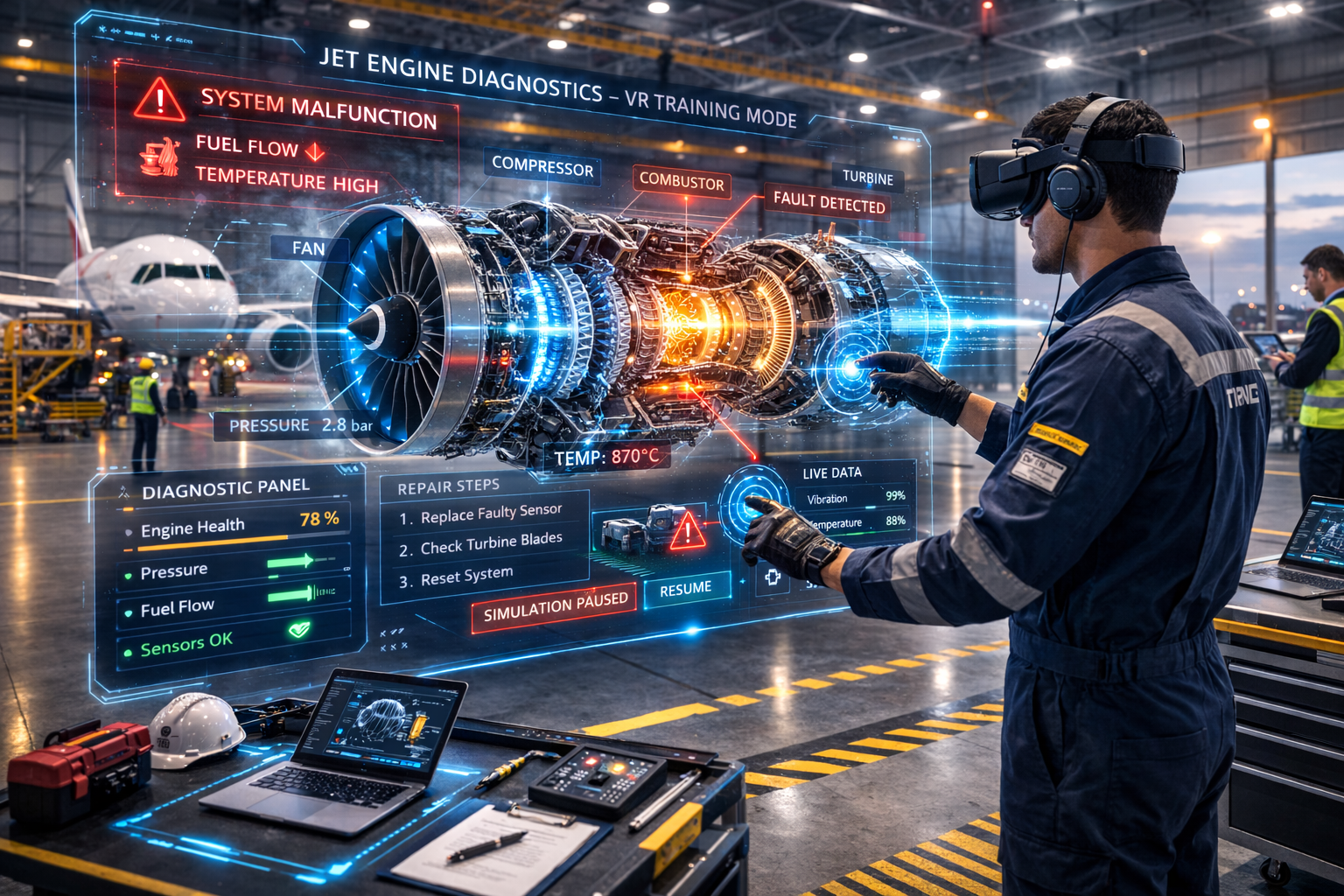
VR training for technicians enables realistic and immersive simulators to help them engage in intricate virtual models of aircraft systems, simulating real-life MRO work without physical equipment. These simulated conditions allow these trainees to form muscle memory and enhance their knowledge of the complicated process by rehearsing in an involving practical manner.
Read More: How Virtual Reality is Revolutionizing Technician and Aviation Training
Risk-Free Training for Critical Procedures
Virtual reality offers a risk-free practice area to which aviation technicians can learn more about critical and potentially hazardous practices, like engine diagnostics or system malfunctions, without jeopardizing people or costly equipment.
Standardised Training Across Fleets and Locations
VR training provides standardised instructions to technicians irrespective of the geographic location or the fleet type. Digital modules are capable of being implemented in more than one location with equal learning experience and advanced content. Through this scalability, aviation training organisations are able to maintain high maintenance standards in the global arena, diminish training differences, and simplify workforce development in different teams.
Key Use Cases of VR in Aviation MRO and Crew Training
A few significant uses of VR in Aviation MRO and Crew Training are as follows:
Aircraft Maintenance and Repair Operations (MRO)
The VR safety training simulation is changing the world of airplane maintenance, where technicians are used to practicing intricate processes in a virtual setting and consequently apply them to real aircraft. They include engine monitoring, hydraulic system repairs, and avionics checkups. The use of immersive VR training has assisted organisations such as Delta Air Lines to enhance the level of proficiency of their technicians on a daily basis with minimal expenditure in relation to physical resources.
Cabin Crew Safety and Emergency Response Training
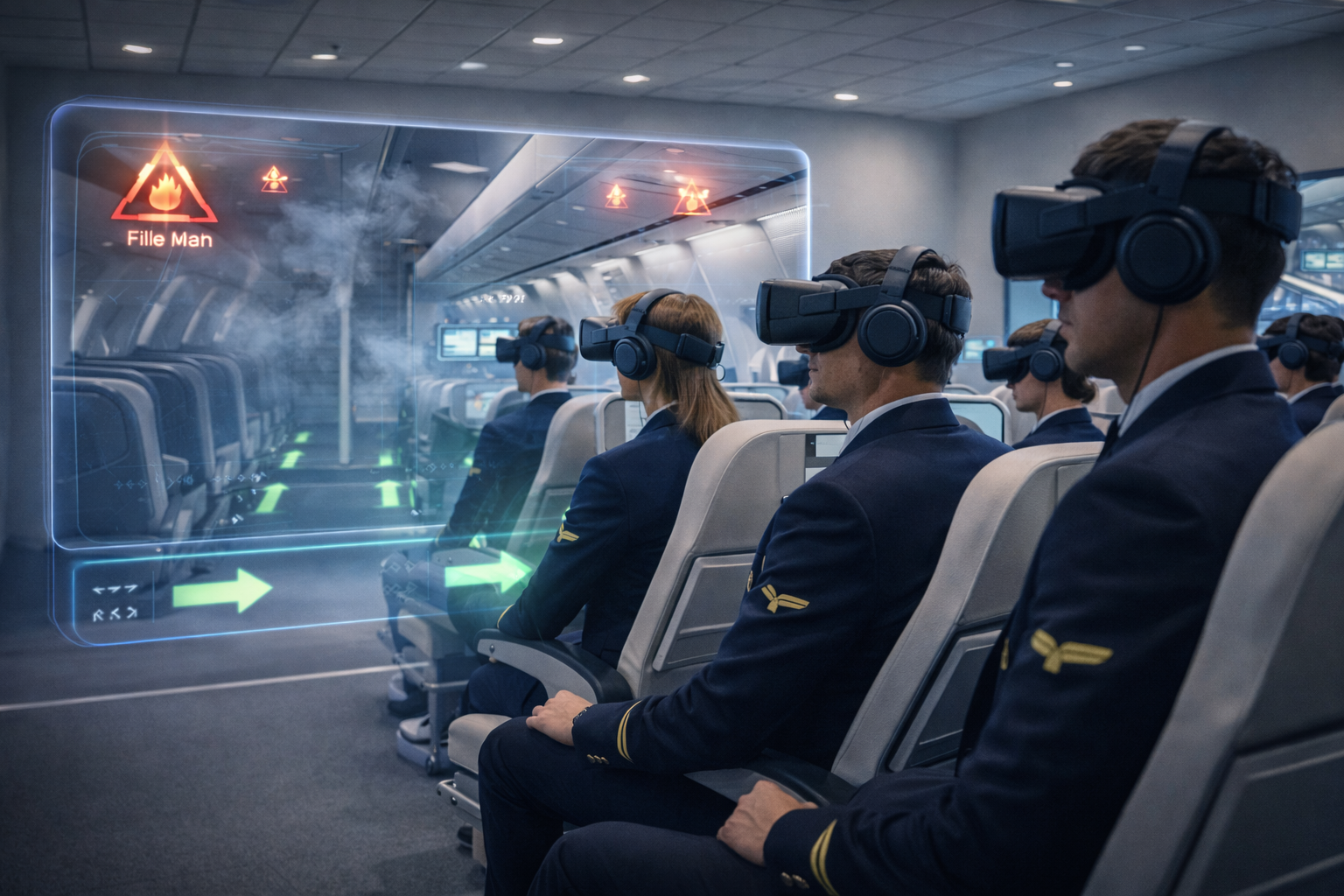
VR simulations enable the cabin crew to train emergency evacuations, fire response, and decompression in real-world simulated cabins with greater safety preparedness without risk. Like, at Emirates airlines 23,000 cabin crew will soon be in a position to finish their recurrent training on SEP (Safety and Emergency Procedures) with MIRA (immersive virtual training platform).
Ground Handling and Ramp Operations
VR safety training simulation helps ground crew and ramp operators to train in high-risk operations that are difficult to practice (such as aircraft towing, refuelling, and equipment handling) in a virtual environment controlled setting. This will aid in mitigating human error and enhancing coordination around aircraft operations, which are essential to operational efficiency and accident prevention.
Aircraft Systems Familiarisation
VR provides 3D tours of complicated aircraft systems and parts, assisting the technicians and the crew to understand the architecture and functions of the aircraft. It has been demonstrated that VR modules can enhance competency, problem-solving skills, and make the learning and engagement processes more engaging.
Business Benefits for Aviation Companies
Aviation companies gain some business advantages through the following.
Reduced Training Costs and Downtime
VR training reduces onboarding time by up to 65% and enables companies to achieve ROI in the first year of implementation. VR modules are also estimated to save organisations from high-end training costs by reducing travel expenses, instructor fees, and the costly downtime associated with physical equipment.
Improved Safety and Compliance Readiness
The simulation of VR safety training improves the readiness for high-risk situations without any consequences. Companies using VR have claimed a minimised number of accidents, and employees are becoming aware of possible hazards.
Faster Skill Development and Knowledge Retention
VR can enable maintenance staffers to retain skills through experience, at a much lower cost than putting a real jet in the sky. More training repetitions can be supported through VR, particularly for expensive, unusual, or hazardous conditions.
Read More: Ways to Use AR and VR to Bridge the Workforce Skill Gap in Modern Enterprises
Implementing VR Training Programs in Aviation Enterprises
Ways to implement VR training programs in aviation companies
Identify High-Impact Training Scenarios
The initial stage of the VR training implementation is to enable the high-impact aviation procedures with immersive learning. Suitable candidates need to be trained in high-risk, high-cost, and skill-intensive situations (e.g., aircraft maintenance procedures), emergency situations, ramp operations, and crew safety drills. They need to be best practices in these areas without disrupting the operations. Emphasising such situations will see quicker adoption, quantifiable performance, and evident value of VR investments.
Partner with an Experienced VR Development Company
The key to successful implementation is collaboration with a VR development partner who is aware of the aviation workflow, compliance needs, and safety standards. A qualified VR firm like Aura Interact regulates gamified training development courses, adhering to regulations, aircraft requirements, specifications, and operational requirements.
Scale Training Programs and Measure ROI
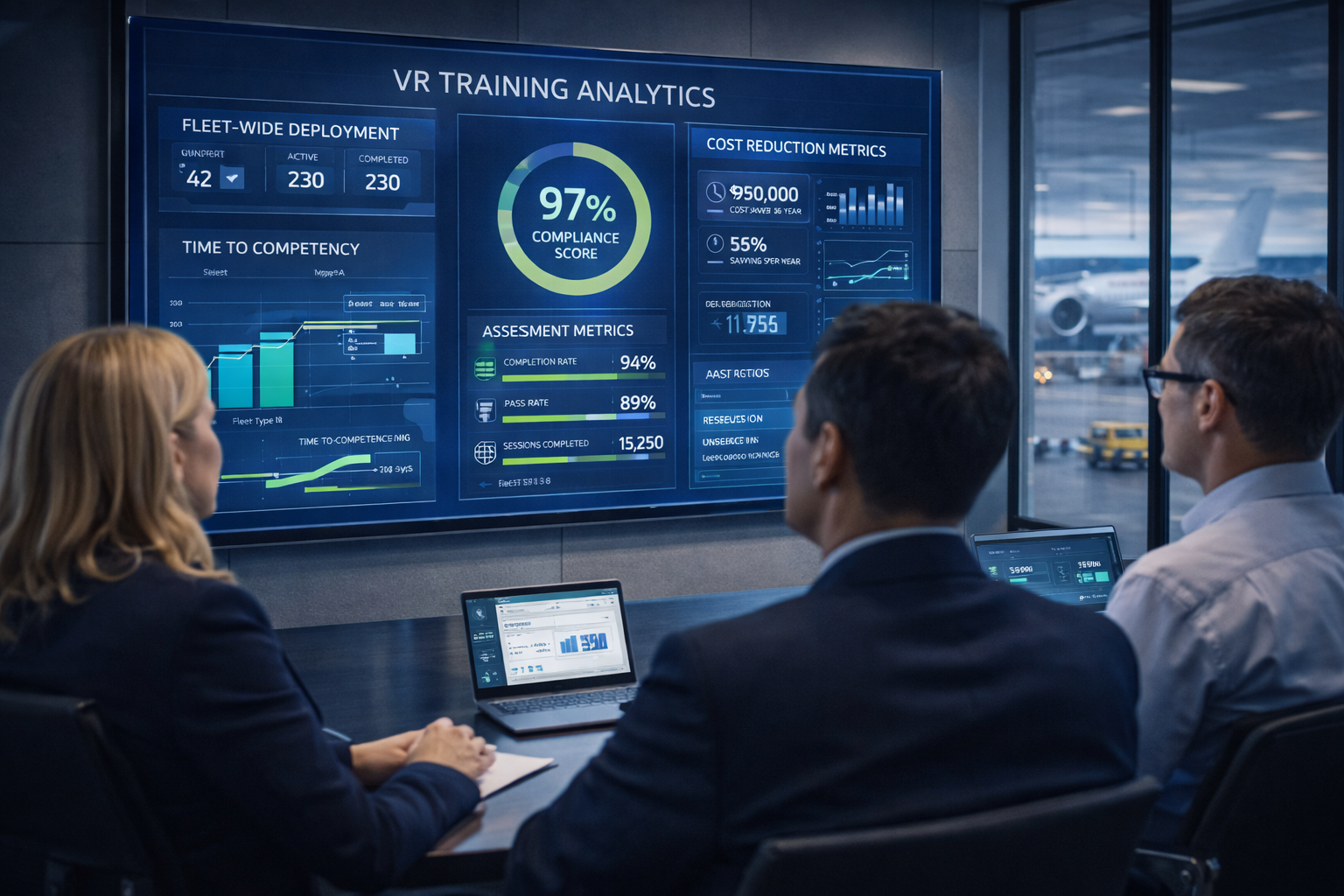
After primary programs turn out to be effective, VR training can be scaled at the fleet, location, and departmental levels. ROI calculation based on time saved in training, the incident rate, better grades on assessment, and quicker skill preparation assists aviation companies. These refine and optimize the VR training methods as a means of achieving successful long-term outcomes.
Conclusion
Virtual reality is quickly becoming an essential part of contemporary aviation training. It is safer, more efficient in increasing skill retention and operational preparedness, and an inexpensive alternative to traditional training.
For the aviation firms seeking the latest immersive solutions, AuraInteract has gained recognition as the Top AR VR development company. Our experts are designing realistic and industry-specific virtual training modules to help organisations to speed workforce competency, and improve MRO activities.